
What's Happening?
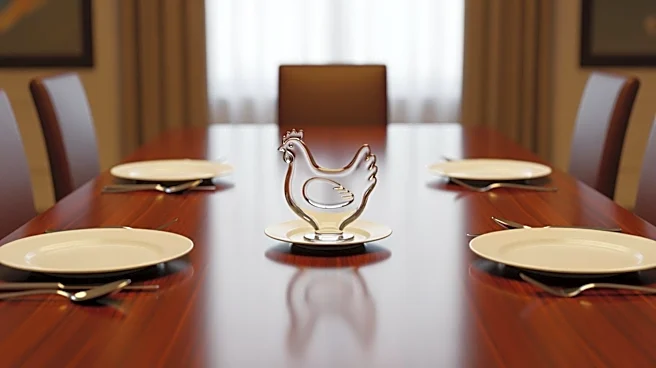
Documents obtained through a freedom of information request reveal that UK officials were briefed on the possibility of allowing chemical-washed chicken from the US into the UK. This briefing occurred
before a meeting with the US embassy, as part of ongoing trade deal negotiations. The documents indicate that the UK government considered altering food standards to permit the import of US chicken treated with chlorine dioxide and other chemicals, a practice banned in the EU since 1997. The potential change in policy has raised concerns among consumer groups and the public, who fear a lowering of food safety standards.
Why It's Important?
The potential shift in UK food standards to allow US chlorinated chicken could have significant implications for international trade relations and consumer confidence. The move is seen as a response to pressure from the Trump administration during trade negotiations. Allowing chemical-washed chicken could lead to a broader acceptance of US agricultural practices, which differ from those in the UK and EU. This development may also spark public debate over food safety and animal welfare standards, as well as the influence of trade agreements on domestic policies.
Beyond the Headlines
The revelation of these discussions highlights the complex interplay between trade negotiations and domestic policy decisions. It underscores the challenges governments face in balancing economic interests with public health and safety concerns. The potential acceptance of US chlorinated chicken could set a precedent for future trade agreements, where food safety standards may be negotiated. This situation also raises ethical questions about transparency and accountability in government decision-making processes, as public assurances of maintaining high food standards appear to conflict with behind-the-scenes negotiations.