



What's Happening?
The American Federation of Government Employees, the largest federal workers union, has criticized President Trump's plan to deploy Immigration and Customs Enforcement (ICE) agents to assist with airport security during the ongoing partial government
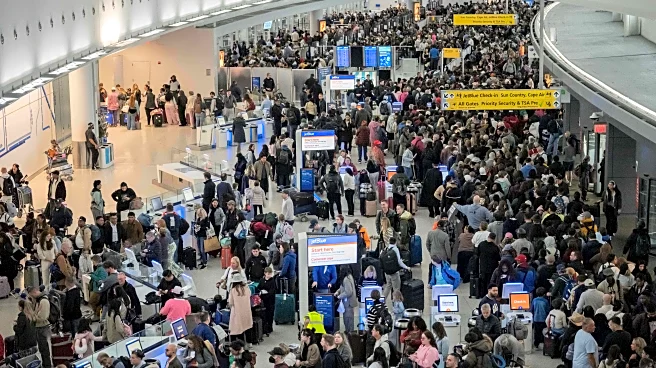
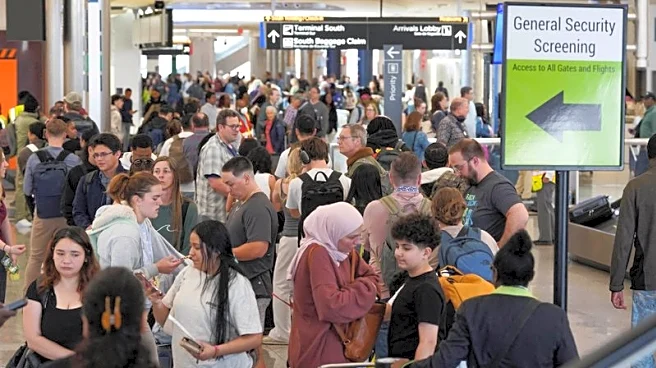
shutdown. The union argues that ICE agents lack the specialized training required for aviation security, which TSA officers undergo to detect explosives and other threats. This move comes as the Department of Homeland Security, which oversees the TSA, remains unfunded due to congressional debates over immigration policies. TSA officers have not received paychecks for five weeks, leading to over 400 resignations since mid-February. The staffing shortage has resulted in long wait times and massive lines at airport security checkpoints.
Why It's Important?
The decision to replace TSA officers with ICE agents has significant implications for airport security and the broader immigration policy debate. The union's criticism highlights concerns about the effectiveness and safety of using untrained personnel in critical security roles. This situation underscores the impact of the government shutdown on federal employees and public services, as TSA officers face financial strain and potential job insecurity. The move also reflects the administration's prioritization of immigration enforcement, which has been a contentious issue in U.S. politics. The ongoing shutdown and its effects on air travel could pressure Congress to reach a resolution, as disruptions in transportation have historically influenced legislative action.
What's Next?
The administration, led by White House Border Czar Tom Homan, is actively working on a plan to integrate ICE agents into airport security, with details expected soon. The union and other stakeholders may continue to advocate for a resolution that addresses the pay and working conditions of TSA officers. As the shutdown persists, pressure may mount on Congress to negotiate a compromise that funds the Department of Homeland Security and resolves the immigration policy impasse. The situation could lead to further public and political scrutiny of the administration's handling of federal workforce issues and immigration enforcement.