



What's Happening?
A satirical art installation titled 'Iran War Participation Trophy' has been erected on the National Mall in Washington, D.C., drawing significant public attention and mixed reactions. The installation, created by the anonymous art collective Secret Handshake,
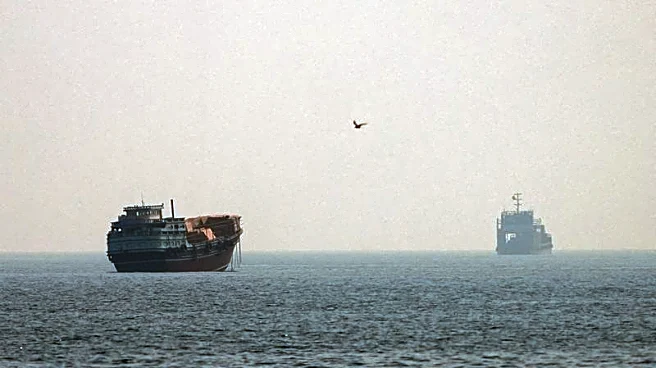
features a 10-foot gold trophy mocking President Trump's claims of victory in the Iran conflict. The piece arrives amid renewed U.S.-Iran tensions, following the collapse of a June interim peace agreement and the resumption of military strikes. The Trump administration has announced plans to reimpose a naval blockade on Iranian ports, charging a 20 percent fee on cargo through the Strait of Hormuz, a move that could impact global oil markets. The art piece, which includes a plaque awarding Trump for his 'enthusiastic involvement in the Iran War,' has sparked debate among visitors, with some praising its satire and others defending the president.
Why It's Important?
The installation highlights ongoing tensions between the U.S. and Iran, as well as domestic divisions over President Trump's foreign policy. The satirical nature of the art piece underscores criticism of the administration's handling of the Iran conflict, particularly in light of the recent escalation. The decision to reimpose a blockade on Iranian ports could have significant economic repercussions, potentially destabilizing global oil markets and affecting international relations. The public's reaction to the installation reflects broader societal debates about the effectiveness and consequences of U.S. military interventions. The art piece also taps into President Trump's known sensitivity to awards and recognition, adding a layer of personal critique to the political commentary.
What's Next?
The Trump administration has dismissed the installation, with a White House spokesperson criticizing the artists and defending the military's achievements. As the art piece remains on display, it is likely to continue drawing public attention and sparking debate. The administration's actions in the Strait of Hormuz will be closely monitored by international stakeholders, with potential implications for diplomatic relations and economic stability. The ongoing conflict with Iran may prompt further artistic and public responses, reflecting the contentious nature of U.S. foreign policy under President Trump.
Beyond the Headlines
The installation raises questions about the role of art in political discourse and its ability to influence public opinion. By satirizing the concept of participation rather than victory, the piece challenges traditional narratives of military success and invites viewers to reconsider the metrics of achievement in international conflicts. The public's engagement with the installation may also reflect broader cultural shifts towards more critical and nuanced interpretations of political events. As the U.S. navigates its relationship with Iran, the intersection of art and politics will likely continue to play a role in shaping public perceptions and policy discussions.