










What's Happening?
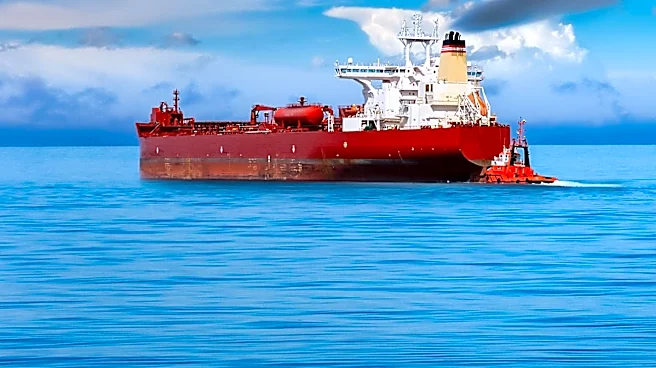
On June 30, Greenpeace activists reported an encounter with a Russian warship while observing a sanctioned crude oil tanker, Kira K, in the German Exclusive Economic Zone (EEZ). The tanker, laden with oil from Primorsk, Russia, is registered in Panama
and has been sanctioned by the UK and EU due to its involvement in the Russian oil trade. The Russian Steregushchiy class corvette Soobrazitelny (531) approached the Greenpeace team at high speed, demanding over radio communication that the activists maintain their distance from the tanker. The Greenpeace team, consisting of members from Germany, Denmark, Sweden, and Ukraine, was documenting the tanker's passage and photographing it. The German Coast Guard vessel Bayreuth was also present, observing the situation. Despite the confrontation, the tanker continued its journey without incident.
Why It's Important?
This incident underscores the ongoing tensions surrounding the enforcement of international sanctions on Russian oil exports. The presence of a Russian warship to escort the tanker highlights the geopolitical complexities and the challenges faced by environmental groups like Greenpeace in monitoring and reporting on such activities. The situation also reflects broader concerns about the effectiveness of sanctions and the role of shadow fleets in circumventing them. For the U.S. and its allies, maintaining the integrity of sanctions is crucial for exerting economic pressure on Russia. The incident may prompt further discussions on international maritime security and the enforcement of sanctions, potentially influencing future policy decisions.
What's Next?
Greenpeace has called for Baltic countries to enhance their control and enforcement of sanctions on shadow fleets. This could lead to increased maritime patrols and stricter monitoring of tanker routes in the region. The incident may also prompt diplomatic discussions between Germany, the EU, and Russia regarding maritime security and the enforcement of sanctions. Additionally, environmental groups may intensify their advocacy efforts, pushing for more robust international cooperation to address the challenges posed by shadow fleets and sanctioned vessels.