





What's Happening?
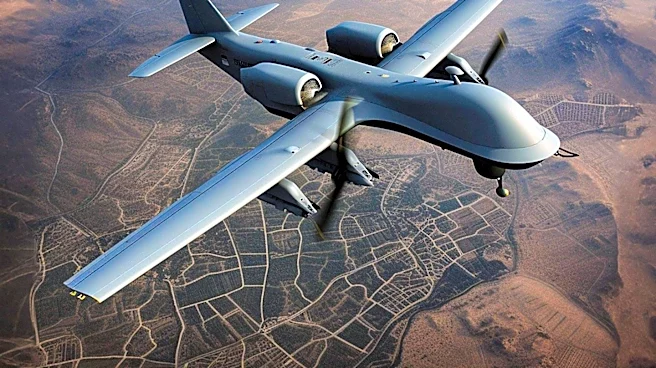
Taiwan's military is moving forward with plans to construct dedicated drone takeoff and landing sites, including a specific NT$991.6 million project for a tactical-drone field in Yilan County. This plan is currently awaiting legislative approval and is projected
to be completed by 2030. However, this initiative has drawn criticism from defense experts who argue that these fixed sites could become vulnerable targets in a conflict scenario. The debate within Taiwan's defense community centers on the operational resilience of static versus mobile drone basing. While the exact number and locations of these sites, as well as the drone models intended for operation, remain unspecified in the initial reports, the core issue revolves around the trade-off between operational convenience and survivability of fixed infrastructure. The public criticism suggests a significant discussion is underway regarding the optimal approach for Taiwan's drone capabilities.
Why It's Important?
The development of fixed drone airfields in Taiwan carries significant implications for national defense strategy and military procurement. The criticism highlights a critical vulnerability: fixed military installations are susceptible to being targeted and disabled by adversaries, potentially undermining the very operational advantage drones are meant to provide. This debate is not unique to Taiwan, as military and commercial operators globally grapple with the balance between reliable infrastructure and the need for resilience against potential attacks or disruptions. For the U.S. and its allies, Taiwan's approach to drone infrastructure serves as a case study in defense planning, particularly in regions with heightened geopolitical tensions. The outcome of this debate could influence future defense procurement decisions, emphasizing either hardened, relocatable infrastructure or mobile launch units, thereby impacting the global defense industry and the types of technologies prioritized for development and acquisition.
What's Next?
The immediate next step for Taiwan's drone airfield plan is legislative approval for the NT$991.6 million project in Yilan County. Following this, the construction is expected to proceed with a target completion date of 2030. Observers will be watching for any adjustments Taiwan makes to its approach in response to the 'fixed-target' critique. A shift towards mobile launch units, dispersed pads, or hardened but relocatable infrastructure would signal that the criticism has been acknowledged and acted upon. Conversely, a continuation of the current plan would indicate that military planners believe the operational benefits of fixed sites outweigh the survivability concerns. This decision will likely influence future defense spending and strategic planning, not only in Taiwan but also among other nations facing similar defense challenges.
Beyond the Headlines
The discussion surrounding Taiwan's drone airfields extends beyond immediate military strategy to broader ethical and technological considerations. The vulnerability of fixed sites raises questions about the long-term sustainability of traditional military infrastructure in an era of advanced precision targeting. It also underscores the evolving nature of warfare, where the ability to rapidly deploy and redeploy assets, rather than relying on static bases, may become paramount. This situation could accelerate the development of more agile and resilient drone technologies and support systems, pushing innovation in areas like mobile command centers, decentralized launch platforms, and advanced camouflage or defensive measures for critical infrastructure. Furthermore, the debate highlights the psychological impact of perceived vulnerability on public confidence and national morale, emphasizing the need for defense strategies that are not only effective but also reassuring to the populace.