








What's Happening?
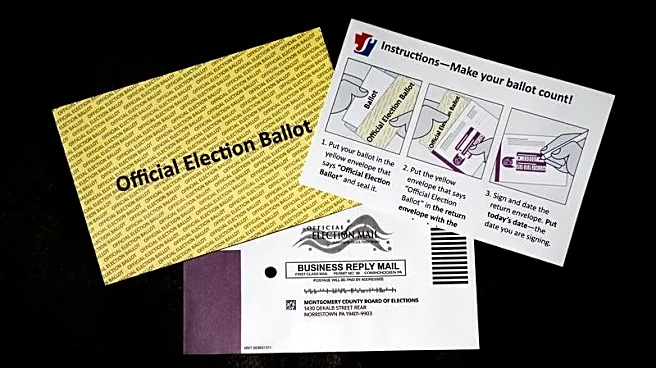
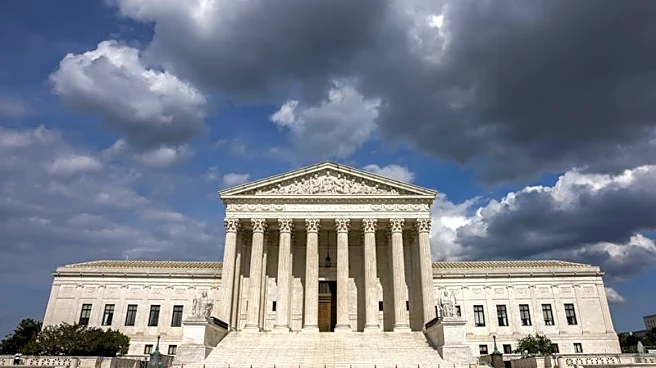
The U.S. Supreme Court has ruled in favor of upholding Mississippi's mail-in voting law, which allows ballots postmarked by Election Day to be counted if received within five days thereafter. This decision came in a 5-4 ruling, with Justice Amy Coney
Barrett writing for the majority. The ruling asserts that federal election-day statutes do not override Mississippi's law, emphasizing that the electorate's choice is made when voting is complete, not when ballots are received. The case, Watson v. Republican National Committee, saw the Republican National Committee and other parties challenge the law, arguing that counting ballots after Election Day violated federal law and could lead to voter fraud. However, the court found no legal basis for these claims, noting that the state has the authority to set its election terms.
Why It's Important?
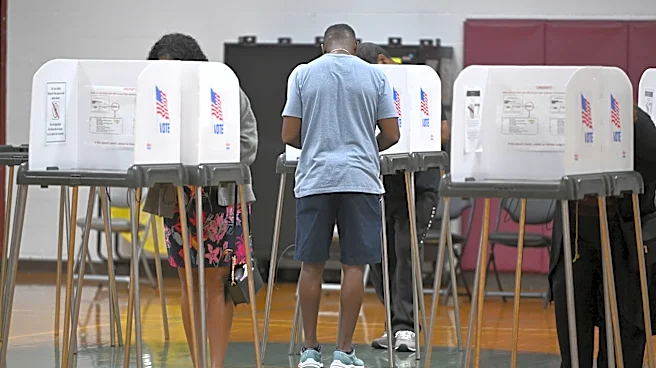
This ruling has significant implications for mail-in voting across the United States, particularly in states with similar laws. It reinforces the autonomy of states to determine how they manage mail-in ballots, potentially influencing future election processes and legal challenges. The decision supports the notion that mail-in voting is a secure and integral part of the electoral process, countering claims of widespread fraud. This could impact political strategies, especially for parties that have opposed mail-in voting, and may lead to increased voter participation by ensuring that ballots are counted even if received after Election Day. The ruling also highlights the ongoing debate over election integrity and the balance between federal and state control in electoral matters.
What's Next?
Following this decision, states with similar mail-in voting laws may feel emboldened to maintain or expand their practices. The ruling could lead to further legal challenges in other states, particularly those with different interpretations of federal election statutes. Political parties may need to adjust their strategies to accommodate the upheld mail-in voting practices. Additionally, the decision may prompt legislative efforts at both state and federal levels to clarify or redefine election-day statutes and mail-in voting regulations. Stakeholders, including election officials and advocacy groups, will likely continue to monitor and influence these developments to ensure fair and accessible voting processes.