
What's Happening?
On February 3, 2026, Russia launched a significant attack on Ukraine, deploying approximately 450 long-range drones and 70 missiles. This assault targeted multiple regions, including Kyiv, Kharkiv, and Odesa,
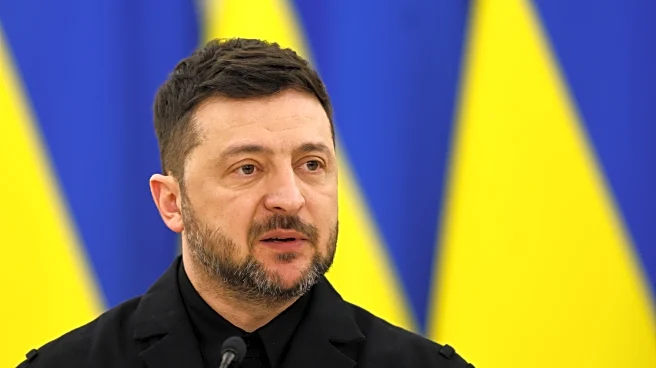
with a focus on civilian infrastructure and energy facilities. Ukrainian President Volodymyr Zelenskyy reported that the attack aimed to disrupt the power grid, leaving many without heating during a harsh winter. The strikes resulted in injuries and significant damage to residential buildings, a kindergarten, and a gas station in Kyiv. The attack also damaged the Hall of Fame at the National Museum of the History of Ukraine in the Second World War. This escalation occurred just a day before US-brokered peace talks in Abu Dhabi, intended to address the ongoing conflict that began in 2022.
Why It's Important?
The timing of this attack is critical as it coincides with scheduled peace talks mediated by the United States, highlighting the ongoing tensions and challenges in resolving the conflict. The assault underscores Russia's strategy to weaken Ukraine's resolve by targeting essential infrastructure, thereby exacerbating civilian hardships. This development could influence the dynamics of the peace negotiations, potentially hardening positions and complicating diplomatic efforts. The international community, particularly the US and its allies, may face increased pressure to provide additional support to Ukraine, both in terms of defense capabilities and humanitarian aid. The attack also raises concerns about the stability of the region and the potential for further escalation.
What's Next?
The upcoming peace talks in Abu Dhabi are a critical juncture for both Ukraine and Russia, with the potential to either de-escalate the conflict or further entrench hostilities. The international community will be closely monitoring the outcomes, as any agreements or failures could significantly impact regional stability. Ukraine is likely to seek increased military and humanitarian support from its allies, while Russia may face additional diplomatic and economic pressures. The effectiveness of the US-brokered talks in achieving a ceasefire or a more comprehensive settlement remains uncertain, with key issues such as territorial control and security guarantees still unresolved.
Beyond the Headlines
This attack highlights the broader geopolitical implications of the conflict, including the role of international diplomacy and the challenges of enforcing international law. The targeting of cultural heritage sites, such as the National Museum of the History of Ukraine, raises ethical concerns about the protection of cultural property during armed conflicts. The ongoing war also poses long-term risks to regional security and economic stability, potentially affecting global markets and international relations. The humanitarian impact, particularly on vulnerable populations, underscores the need for sustained international attention and intervention.