




What's Happening?
The Mineta Transportation Institute (MTI), in collaboration with several university partners, has released new research, tools, and training programs aimed at strengthening rail safety and resilience across the United States. Funded by the Federal Railroad
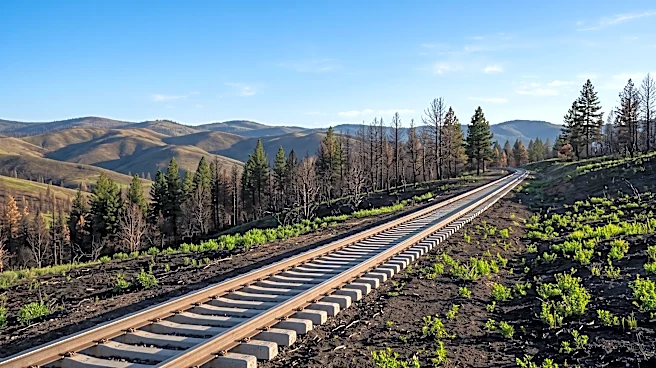
Administration (FRA), the Rail Resilience to Severe Weather (RR2SW) program brought together researchers from MTI at San José State University, Clemson University, Colorado State University-Pueblo, Michigan State University, Northeastern University, Oregon State University, and the University of Hawaiʻi. This initiative provides practical approaches for railroad operators, public agencies, emergency managers, and other transportation professionals to identify risks and improve the rail system's ability to withstand severe weather, natural hazards, and other disruptive events. The resources include tools for understanding wildfire risk, such as the Community Resilience Extreme Events Portal (CREEP) which combines wildfire danger, critical asset, and vulnerability data for California's Class I rail networks, and wildfire preparedness training for urban rail operators. Additionally, the research offers technology for real-time hazard detection using lidar, cameras, and deep learning to identify potential threats, strategies for more resilient freight planning, resources for emergency preparedness, and tools for mapping vulnerabilities across the U.S. rail network.
Why It's Important?
This research is crucial for the U.S. rail industry as it directly addresses the increasing threats posed by extreme weather and other hazards to the safety and reliability of rail systems. By providing practical tools and approaches, MTI's work helps rail agencies proactively prepare for challenges, rather than reacting to crises. Enhanced rail resilience ensures the continuous and safe movement of people and goods, which is vital for the national economy and supply chains. Disruptions to rail transportation can lead to significant economic losses, delays in goods delivery, and compromised passenger safety. The tools for mapping vulnerabilities and real-time hazard detection can prevent accidents and minimize the impact of adverse events, thereby protecting infrastructure investments and reducing operational costs. Furthermore, improved emergency preparedness and resilient freight planning contribute to a more robust and dependable transportation network, benefiting industries that rely on rail for shipping and commuters who depend on passenger services. The emphasis on moving academic research into real-world practice ensures that these advancements have tangible benefits for rail operators and the public.
What's Next?
The Mineta Transportation Institute and its partners will continue to disseminate these new research findings, tools, and training programs to railroad operators, public agencies, and emergency managers across the U.S. The goal is to facilitate the widespread adoption of these practical approaches to enhance rail safety and resilience. Future efforts will likely focus on further developing and refining these tools, potentially incorporating feedback from early adopters and expanding their scope to address emerging threats. There may also be continued collaboration with the Federal Railroad Administration to integrate these findings into national rail safety guidelines and policies. The ongoing implementation of these strategies will lead to more informed decision-making regarding risk identification, emergency planning, and mitigation efforts within the rail sector. Additionally, the success of these initiatives could encourage further funding and research into advanced technologies and methodologies for safeguarding critical transportation infrastructure against a broader range of potential disruptions.
Beyond the Headlines
The deeper implications of this research extend beyond immediate safety improvements, touching upon the long-term sustainability and adaptability of the U.S. transportation infrastructure. By focusing on resilience, the MTI's work acknowledges the growing impact of climate change and other systemic risks on critical national assets. This proactive approach to infrastructure management could set a precedent for other sectors, encouraging a more integrated and data-driven strategy for risk assessment and mitigation. Ethically, ensuring the safety and reliability of rail transportation is a public good, and this research contributes to fulfilling that responsibility, particularly for communities and industries heavily reliant on rail. Culturally, a more resilient rail system can foster greater public trust in transportation networks, potentially encouraging increased ridership and freight utilization. This shift towards predictive maintenance and real-time monitoring also signifies a broader trend in infrastructure management, moving from reactive repairs to preventative strategies, which could lead to significant long-term cost savings and environmental benefits by reducing disruptions and improving operational efficiency.