







What's Happening?
The National Association of Community Health Centers (NACHC) Center for Mobile Health is emphasizing the critical role of mobile health units in expanding access to comprehensive healthcare, particularly for underserved populations. While telehealth has garnered
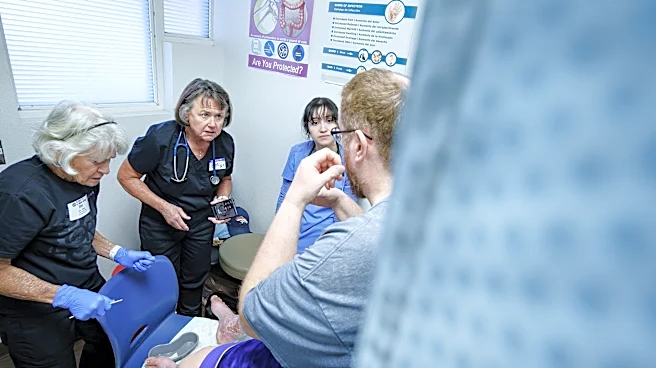
significant policy attention, mobile health, which involves healthcare delivery via mobile units, has received comparatively less focus despite its unique ability to reach individuals in areas where healthcare is difficult to access, including rural communities. Currently, 45% of Community Health Centers (CHCs) operate mobile units, providing essential services such as primary care, dental care, behavioral health screenings, and chronic disease management. The Center for Mobile Health aims to strengthen these programs through science, education, practice, and policy initiatives.
Why It's Important?
The work of the NACHC Center for Mobile Health is vital for addressing healthcare disparities in the U.S., especially in rural and low-income areas where access to traditional healthcare facilities is limited. Community Health Centers, which serve 1 in 3 patients in rural areas, leverage mobile units to bridge geographical and socioeconomic gaps in care. This approach ensures that critical health services, from preventive care to chronic disease management, are brought directly to the communities that need them most. The expansion and strengthening of mobile health programs can lead to improved public health outcomes, reduced emergency room visits for preventable conditions, and greater health equity. For policymakers, it highlights the need for supportive funding models, regulatory frameworks, and reimbursement policies that recognize mobile health as an essential component of the primary care safety net.
What's Next?
The Center for Mobile Health will continue its efforts to build capacity through training, research, and advocacy. This includes convening mobile health experts, developing comprehensive training programs for staff operating mobile units, and creating best practice toolkits for launching and sustaining these programs. Advocacy efforts will focus on advancing sustainable funding models, regulatory frameworks, and reimbursement policies to support mobile health delivery. The goal is to increase the number of CHCs utilizing mobile units to reach more populations with limited healthcare access. Future developments will likely involve further integration of mobile health with broader telehealth initiatives and digital health platforms to create a more cohesive and accessible healthcare system.
Beyond the Headlines
The emphasis on mobile health units by the NACHC Center for Mobile Health points to a deeper understanding of the multifaceted nature of healthcare access. Beyond technological solutions like telehealth, mobile units address the physical barriers that many Americans face, such as lack of transportation, long distances to clinics, and limited local healthcare infrastructure. This approach underscores the importance of community-based care and the need for flexible, adaptable healthcare models that can meet people where they are. It also highlights the social determinants of health, recognizing that access to care is not just about insurance coverage but also about practical considerations like proximity and convenience. The long-term impact could be a more resilient and equitable healthcare system that is better equipped to serve diverse populations and respond to public health crises by bringing essential services directly to communities.