



What's Happening?
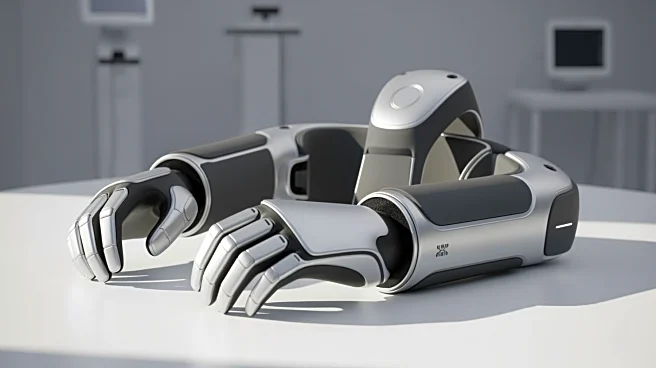
Vilje Bionics, a company based in Norway, has developed an innovative exoskeleton designed to assist stroke victims in regaining the use of their arms. This exoskeleton, which covers the entire arm, detects and amplifies small movements in the arm and shoulder,
allowing users to perform tasks they might otherwise find challenging. The device is particularly aimed at individuals who have suffered partial paralysis due to strokes, a condition that affects many survivors. The exoskeleton has been tested by 40 individuals so far, and the company plans to launch it commercially within the first half of 2026. The development of this technology addresses a growing need for effective rehabilitation tools as more people survive strokes and live with the resulting disabilities.
Why It's Important?
The introduction of the arm exoskeleton by Vilje Bionics represents a significant advancement in rehabilitation technology for stroke survivors. As the global population ages, the incidence of strokes is expected to rise, increasing the demand for innovative solutions to aid recovery and improve quality of life. This exoskeleton offers a new avenue for independence, allowing users to perform daily tasks that were previously difficult or impossible. By enhancing mobility and functionality, the device could reduce the need for long-term care and support, potentially lowering healthcare costs. Additionally, it highlights the role of technology in addressing complex health challenges, paving the way for further innovations in medical devices.
What's Next?
Vilje Bionics plans to continue testing and refining the exoskeleton, with a focus on expanding its availability to stroke survivors globally. The company aims to begin commercial sales in Norway within the next few months, with potential plans for international distribution. As the product gains traction, it may attract interest from healthcare providers and rehabilitation centers looking to incorporate advanced technology into their treatment programs. The success of this exoskeleton could also inspire further research and development in the field of assistive devices, encouraging other companies to explore similar innovations.
Beyond the Headlines
The development of the arm exoskeleton raises important ethical and societal questions about access to advanced medical technologies. As these devices become more prevalent, ensuring equitable access for all patients, regardless of socioeconomic status, will be crucial. Additionally, the integration of such technology into everyday life may require changes in healthcare policies and insurance coverage to accommodate new treatment modalities. The exoskeleton also underscores the potential for 3D printing and other emerging technologies to revolutionize the production and customization of medical devices, offering personalized solutions for patients with unique needs.