



What's Happening?
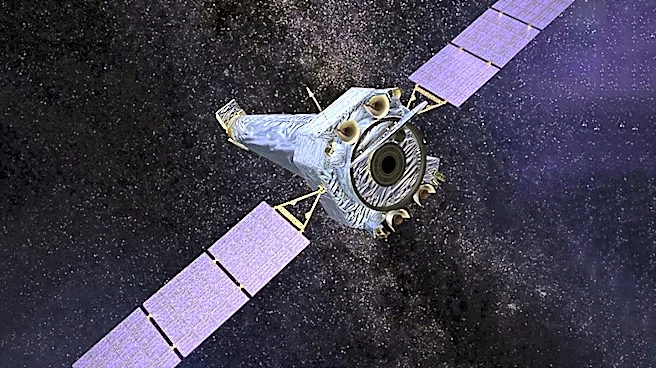
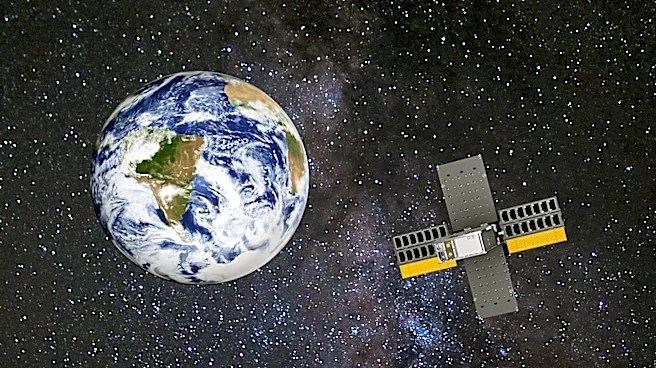
NASA and Katalyst Space are collaborating to stabilize the LINK spacecraft, which is intended to boost the orbit of NASA's Neil Gehrels Swift Observatory. Recent efforts have successfully reduced the spacecraft's spin rate from approximately 9 degrees
per second to less than 4 degrees per second through a series of thruster burns. The teams are exploring innovative approaches to further stabilize the spacecraft and ensure the success of the mission. The LINK spacecraft is expected to approach the Swift Observatory by the end of August, with ongoing evaluations and adjustments being made to ensure mission success.
Why It's Important?
The stabilization of the LINK spacecraft is crucial for the success of NASA's Swift Boost mission, which aims to enhance the capabilities of the Swift Observatory. This mission is significant for advancing space exploration and research, as the Swift Observatory plays a vital role in observing gamma-ray bursts and other cosmic phenomena. Successful stabilization and execution of the mission could lead to new scientific discoveries and enhance our understanding of the universe. The collaboration between NASA and Katalyst Space also highlights the importance of partnerships in advancing space technology and exploration.
What's Next?
NASA and Katalyst Space will continue to monitor and adjust the LINK spacecraft's trajectory and stability. Further updates on the mission's progress and any additional measures taken to ensure its success will be provided by NASA. The outcome of this mission could influence future collaborations and strategies in space exploration, particularly in the development and deployment of spacecraft designed to enhance existing observatories.