


What's Happening?
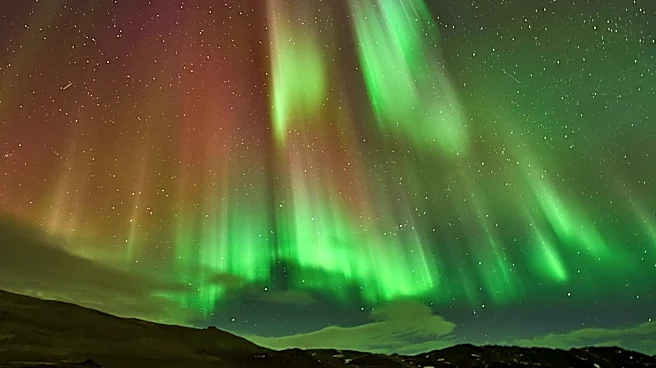
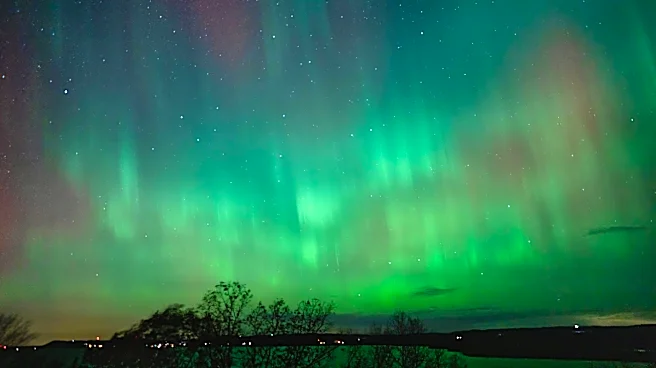
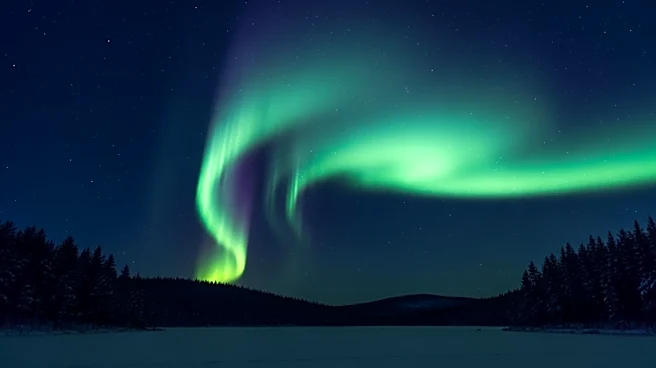
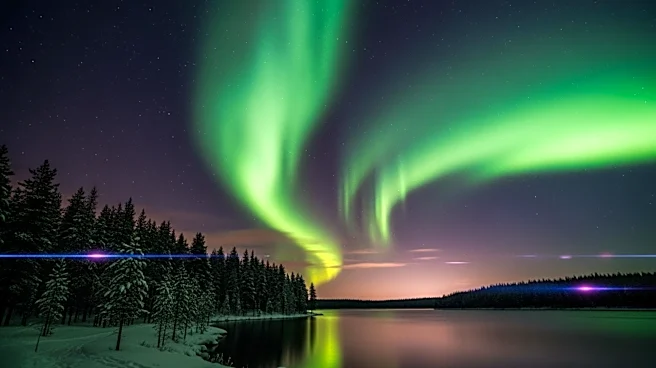
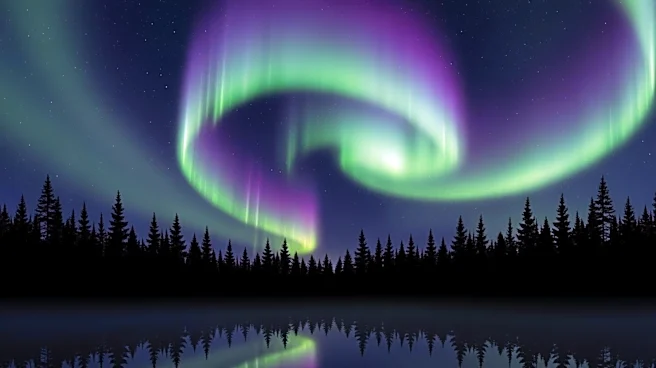
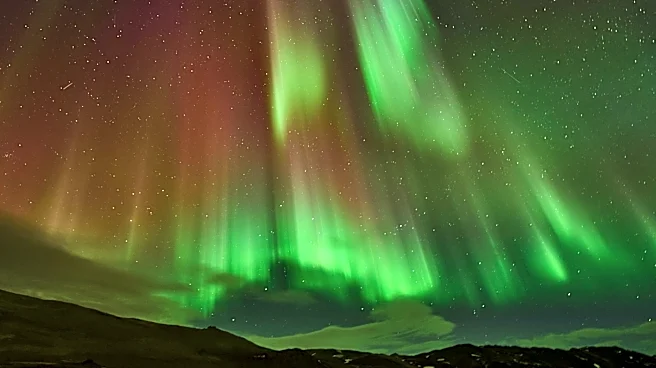
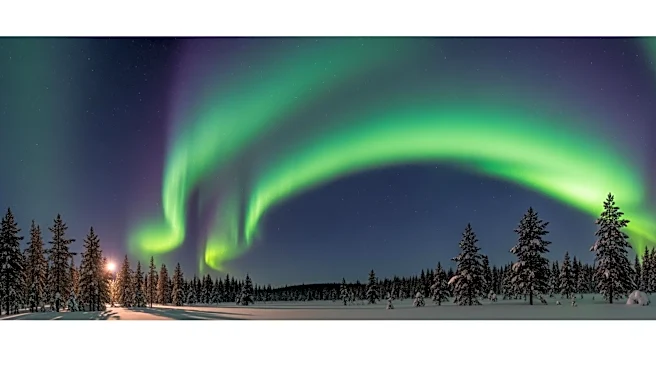
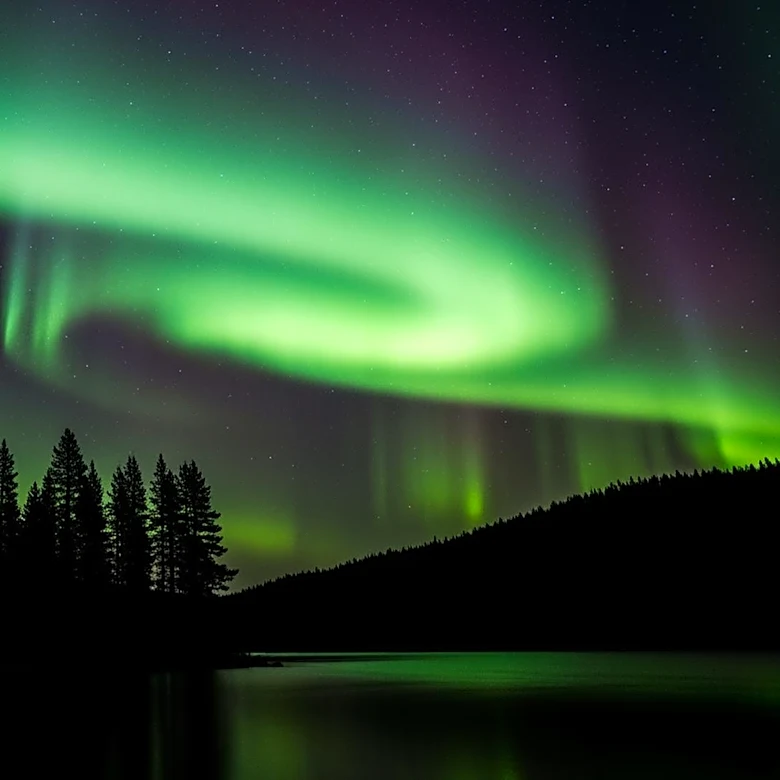
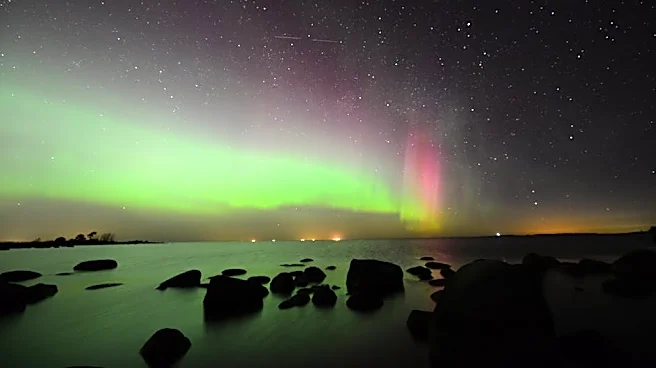
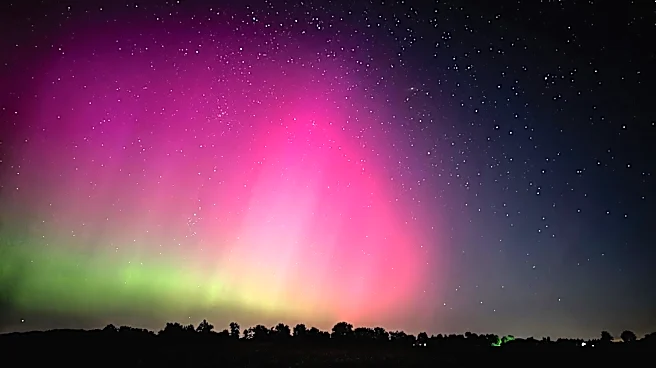
The National Oceanic and Atmospheric Administration (NOAA) has announced that the northern United States and much of Canada are set to experience a stunning display of the aurora borealis, also known as the Northern Lights, over the weekend. This natural
phenomenon occurs when high-energy particles from space collide with Earth's atmospheric gases near the magnetic poles, creating vibrant streaks of green, purple, and pink in the night sky. The geomagnetic storm responsible for this event is expected to peak on Saturday night, offering the best viewing opportunities just after sunset or before sunrise. While auroras are typically visible in the Earth's northernmost latitudes, this event provides a rare chance for those further south to witness the spectacle.
Why It's Important?
The aurora borealis is not only a breathtaking natural display but also a significant indicator of space weather, which can have various impacts on Earth. For scientists, observing auroras helps in understanding the interactions between solar wind and Earth's magnetic field. For the public, it offers a unique opportunity to experience a phenomenon usually reserved for those living near the poles. This event could boost local tourism in areas where the aurora is visible, as enthusiasts travel to catch a glimpse of the lights. Additionally, it raises awareness about the broader implications of space weather, which can affect satellite operations and power grids.
What's Next?
As the geomagnetic storm progresses, NOAA will continue to monitor the situation and provide updates on viewing conditions. Enthusiasts and photographers are likely to travel to areas with clear skies and minimal light pollution to capture the event. Local businesses in these regions may see an increase in visitors seeking accommodations and services. Scientists will analyze data collected during the storm to enhance understanding of space weather phenomena. Public interest in auroras may lead to increased educational outreach and engagement with space science topics.