




What's Happening?
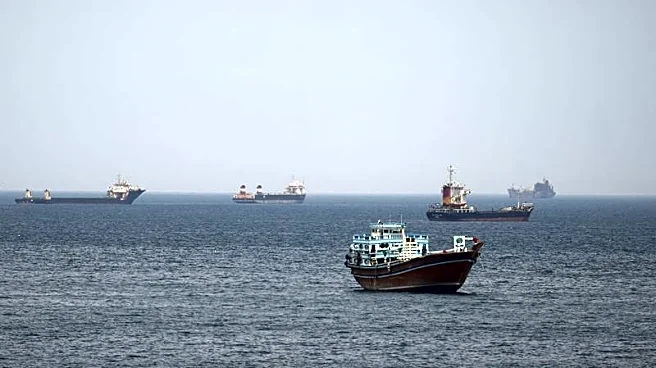
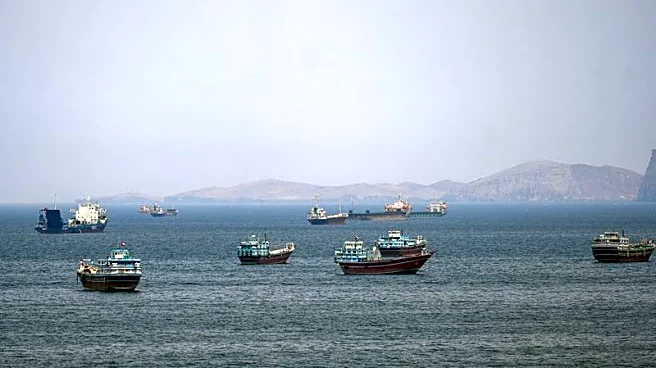
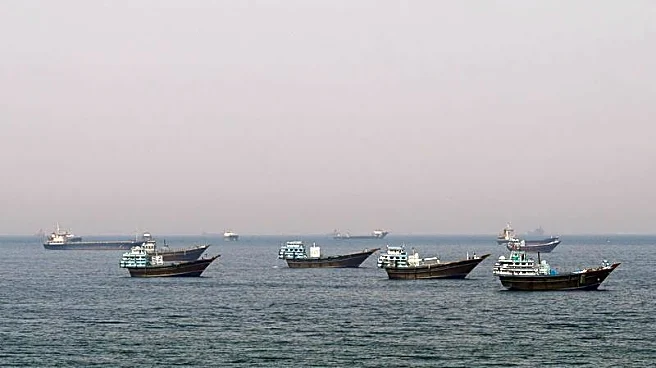
Scammers are targeting maritime shipping companies by offering fake safe passage through the Strait of Hormuz in exchange for cryptocurrency payments. This scheme has emerged amid geopolitical tensions affecting the strait, a critical chokepoint for global
oil shipments. Greek security consultancy Marisks has warned that these offers, which claim to be sanctioned by Iranian authorities, are fraudulent. At least one ship has fallen victim, attempting to transit the strait after making a payment, only to be fired upon by Iranian gunboats. The situation highlights the ongoing challenges in securing maritime routes and the vulnerabilities of shipping companies to cyber and financial fraud.
Why It's Important?
The exploitation of maritime shipping through scams poses significant risks to global trade and security. The Strait of Hormuz is a vital passage for oil and gas shipments, and disruptions can have far-reaching economic impacts. The use of cryptocurrency in these scams complicates tracking and enforcement, highlighting the need for enhanced cybersecurity measures in the maritime industry. Shipping companies face potential financial losses and operational disruptions, which could lead to increased shipping costs and affect global supply chains. This situation underscores the importance of international cooperation and regulatory frameworks to address maritime security and fraud.
What's Next?
Shipping companies and international maritime organizations may need to strengthen their security protocols and increase vigilance against fraudulent schemes. There could be a push for greater transparency and communication between countries to ensure safe passage through critical maritime routes. Additionally, regulatory bodies might consider implementing stricter controls on cryptocurrency transactions to prevent their use in illegal activities. The situation may also prompt discussions on the geopolitical implications of control over the Strait of Hormuz and the need for diplomatic solutions to ensure the free flow of trade.