




What's Happening?
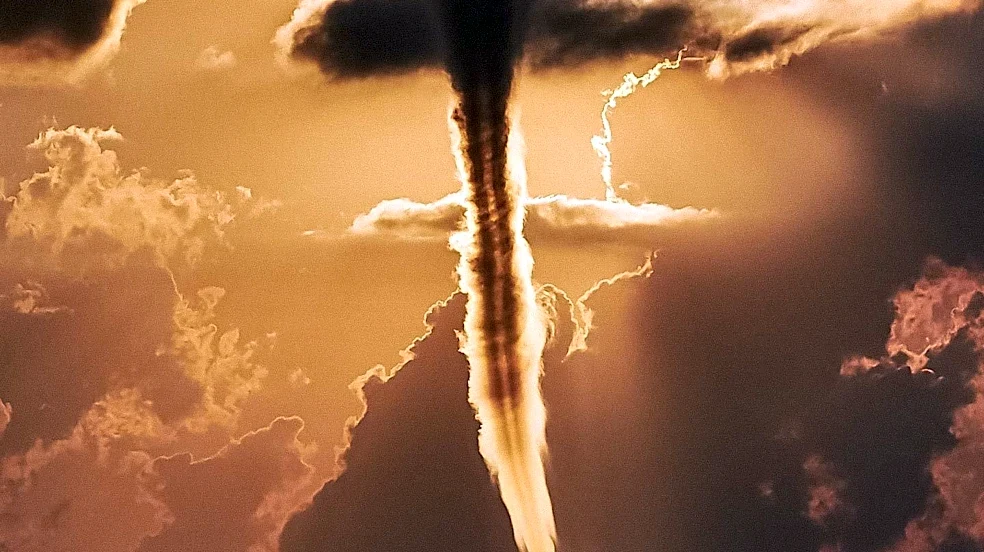
A waterspout was observed off the British coast, specifically moving along the eastern side of Looe Island in Cornwall before heading towards the coast and bringing heavy rainfall. Concurrently, reports of potential tornado activity emerged in Kent and Essex,
where strong winds caused damage to homes and trees. In Frinton-on-Sea, Essex, a sudden gust of powerful winds tore off roof tiles and brought down a chimney stack. The Tornado and Storm Research Organisation (TORRO) is currently investigating these incidents. Experts from TORRO have stated that it is premature to definitively determine whether the events in Kent and Essex were tornadoes or simply strong gusts associated with showers, pending a full investigation into the reported damage. Waterspouts are a type of tornado that forms over water and typically inflict less severe damage than their land-based counterparts, though they can become dangerous if they move ashore. Unstable atmospheric conditions, influenced by a 'cold pool aloft' moving westward from the continent and unusually warm seas following a hot summer, are believed to have contributed to these weather phenomena.
Why It's Important?
While the immediate impact is localized to the affected areas in the UK, the occurrence of waterspouts and potential tornado activity highlights broader meteorological trends that could have implications for coastal regions globally, including parts of the U.S. The influence of unusually warm sea temperatures on atmospheric conditions is a significant factor, suggesting a potential link to climate patterns. For U.S. coastal communities, particularly those susceptible to severe weather, these events serve as a reminder of the dynamic and sometimes unpredictable nature of marine weather phenomena. Understanding the conditions that lead to waterspout formation and their potential to move inland is crucial for improving forecasting and preparedness strategies. While waterspouts are generally less destructive than land tornadoes, their ability to cause damage upon reaching shore underscores the need for robust early warning systems and public awareness campaigns in vulnerable areas. The ongoing investigation by TORRO will provide valuable data that could inform meteorological research and hazard mitigation efforts internationally.
What's Next?
TORRO is actively appealing for information from the public regarding the incidents to aid their investigation. The organization will conduct a full assessment of the damage to determine if the events in Kent and Essex were indeed tornadoes or strong wind gusts. This investigation will be crucial in understanding the specific meteorological conditions that led to these occurrences. Meanwhile, Cornwall is bracing for powerful winds later in the week, with the Met Office issuing a yellow weather warning from midnight until noon on Friday, cautioning about 'damaging gusts and transport disruption' and the potential for flying debris and power cuts. The first storm of the season, named Storm Austen, is expected to bring unsettled conditions to the UK from Thursday. The findings from TORRO's investigation could lead to updated weather advisories or a re-evaluation of risk assessments for coastal areas in the UK and potentially inform similar assessments in other regions prone to such weather events.
Beyond the Headlines
The reported waterspout and potential tornado activity in the UK underscore the increasing complexity of weather patterns, potentially influenced by broader climate shifts. The mention of 'unusually warm seas following a hot summer' as a contributing factor points to the ongoing discussion about the impact of rising ocean temperatures on atmospheric stability and severe weather events. While waterspouts are a known phenomenon, their occurrence and potential to transition into land-based tornadoes highlight the need for continuous research into the interaction between marine and terrestrial weather systems. This event could prompt further scientific inquiry into the frequency and intensity of such phenomena in a changing climate. For the public, it serves as a vivid illustration of how localized weather can be influenced by larger environmental factors, emphasizing the importance of staying informed about weather warnings and understanding the risks associated with different types of severe weather, even those typically considered less destructive.