




What's Happening?
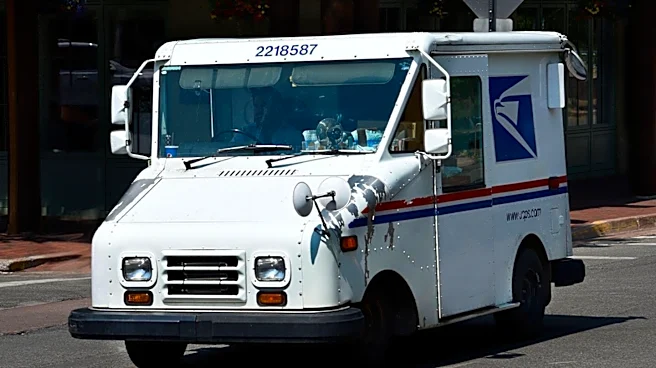
The U.S. Postal Service (USPS) is reconsidering its decision to not resume curbside mail delivery for residents rebuilding homes in Lahaina, Hawaii, following the 2023 wildfire. Initially, USPS applied a 2018 policy, typically for new single-family housing
projects, requiring centralized cluster mailboxes for rebuilt homes. This policy sparked significant concern and outrage among local residents and officials. Maui Mayor Richard Bissen expressed serious concerns in a September 2 letter to USPS, emphasizing that Lahaina is not a new community and its rebuilding should not be treated as new development. In response, Jennifer Selde, a USPS government relations liaison, informed Mayor Bissen in an October 9 letter that senior Retail and Delivery leadership reevaluated the matter. USPS is now open to offering curbside delivery if the town and residents establish conditions necessary for safe delivery, such as ensuring proper mailbox locations and clear access for carriers. Hawaii's congressional delegation, including U.S. Reps. Jill Tokuda and Ed Case, and U.S. Sens. Brian Schatz and Mazie Hirono, also urged USPS to change course, advocating for direct mail delivery for all returning families.
Why It's Important?
This development is important for the Lahaina community as it directly impacts the restoration of normalcy and essential services for residents recovering from the devastating 2023 wildfire. The initial USPS policy, which mandated centralized mailboxes for rebuilt homes, was seen as a significant hurdle for a community striving to rebuild its infrastructure and daily life. Direct mail delivery is more than a convenience, especially for individuals with limited mobility, and its absence added to the challenges faced by fire survivors. The reconsideration by USPS, prompted by local and congressional advocacy, highlights the power of community and political pressure in influencing federal agency policies. It also underscores the unique challenges faced by disaster-stricken areas, where standard policies may not be appropriate or sensitive to the needs of a recovering population. The outcome will set a precedent for how federal services adapt to the specific circumstances of communities undergoing extensive rebuilding efforts after natural disasters.
What's Next?
USPS local leadership plans to meet with Mayor Bissen's administration officials to discuss the specific conditions required for restoring curbside delivery. Homeowners are advised to consult with their local postmaster before installing new mailboxes to ensure compliance with regulations and acceptable locations. The Postal Service will only restart delivery once mailbox locations are approved and streets are sufficiently occupied. Additionally, USPS is considering providing individualized mail service for the 167-unit Kilohana project, a temporary housing development for fire survivors, if occupants reside there for at least six months and sufficient package lockers are installed. The future of the Lahaina town post office, which burned down in the fire, is also under an "ongoing discontinuance study," with a final decision subject to review by the independent Postal Regulatory Commission. County officials are also preparing regulatory changes for on-street parking in Lahaina's rebuilding neighborhoods to ensure safe access for postal delivery and other essential services.
Beyond the Headlines
The situation in Lahaina extends beyond mere mail delivery; it touches upon the broader themes of community resilience, bureaucratic flexibility, and the role of government services in post-disaster recovery. The initial application of a standard policy to a unique disaster recovery context highlights a potential disconnect between federal guidelines and on-the-ground realities. The pushback from local officials and the congressional delegation underscores the importance of localized advocacy in shaping national policy implementation. This case could serve as a model for other communities facing similar rebuilding challenges, emphasizing the need for federal agencies to adopt more adaptive and empathetic approaches in disaster zones. The debate also brings to light the evolving nature of mail delivery services in an era of increasing package volume and changing urban landscapes, particularly in the context of rebuilding efforts where infrastructure is being reimagined. The decision on the Lahaina town post office further illustrates the long-term impact of disasters on essential public services and the complex process of their restoration or re-establishment.