


What's Happening?
Recent studies reveal that U.S. consumers are increasingly burdened by inflation and tariffs, significantly affecting their spending behaviors. According to a study by Simon-Kucher, only a third of respondents understand the impact of tariffs, yet the prevailing
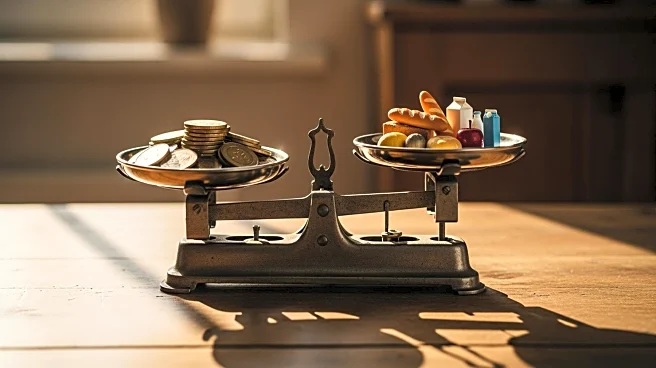
sentiment is that prices are rising, and households are bearing the cost. The '2025 U.S. Consumer Tariff Market Study' indicates that 78% of consumers have felt the impact of inflation over the past three years, with women reporting a more acute price squeeze than men. Consumers have noticed price increases in electronics, food, apparel, and home essentials. The Kearney Institute's survey shows that consumers are not just cutting back on purchases but are also redistributing their spending across different categories and price tiers. Many are opting for thrifted or resale apparel and cheaper brands, with 54% eating out less and 44% buying fewer clothes.
Why It's Important?
The ongoing inflation and tariffs are reshaping consumer behavior in the U.S., highlighting a shift towards more price-sensitive purchasing decisions. This economic strain is causing consumers to adjust their spending habits, which could have long-term implications for retailers and the broader economy. As consumers become more selective, businesses may need to adapt by offering more affordable options or risk losing market share. The pressure on household budgets could also lead to reduced consumer spending, potentially slowing economic growth. The situation underscores the need for policymakers to address inflation and tariff-related issues to alleviate the financial burden on consumers.
What's Next?
As consumers continue to navigate the challenges of inflation and tariffs, businesses may need to innovate and offer more value-driven products to retain customers. Retailers might focus on maintaining competitive pricing for essential items while exploring new strategies to attract cost-conscious shoppers. Policymakers could face increasing pressure to implement measures that address inflation and reduce the impact of tariffs. The evolving consumer landscape may also prompt further studies to understand the long-term effects of these economic pressures on spending habits and overall economic health.
Beyond the Headlines
The current economic environment is not only affecting consumer spending but also altering cultural and social dynamics. The shift towards thrifted and resale items reflects a growing acceptance of sustainable and cost-effective shopping practices. This trend could lead to a more significant cultural shift towards sustainability and conscious consumption. Additionally, the economic divide highlighted by the K-economy concept suggests that financial disparities may continue to influence consumer behavior, potentially exacerbating social inequalities.