



What's Happening?
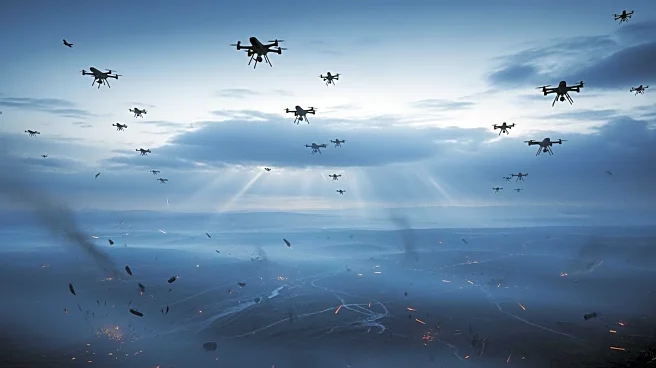
Russia has initiated a new offensive against Ukraine, launching 948 drones in a 24-hour period, marking one of the largest aerial attacks since the conflict began. The attacks resulted in casualties and damage to infrastructure, including a UNESCO World
Heritage Site in Lviv. Ukrainian President Volodymyr Zelenskyy has called for increased air defense support from allies, highlighting a potential missile deficit as the U.S. focuses on its conflict with Iran. The offensive coincides with ongoing talks between Ukraine and the U.S. regarding security guarantees.
Why It's Important?
This large-scale drone attack signifies a significant escalation in the conflict, potentially altering the strategic landscape in Ukraine. The use of drones in such numbers underscores the evolving nature of warfare, where unmanned systems play a critical role. The attack also highlights the vulnerability of Ukrainian infrastructure and the urgent need for enhanced air defense capabilities. The international community, particularly NATO allies, may face increased pressure to provide military support to Ukraine, balancing this with other global commitments. The situation could influence geopolitical dynamics, particularly in relation to U.S. foreign policy and its military focus.
What's Next?
Ukraine's call for additional air defense support may lead to increased military aid from Western allies, potentially involving advanced missile systems. The ongoing negotiations for security guarantees with the U.S. could result in formal agreements that strengthen Ukraine's defense posture. Meanwhile, Russia's continued offensive may prompt further international condemnation and potential sanctions. The conflict's progression will likely impact global energy markets and diplomatic relations, particularly if the situation escalates further.