







What's Happening?
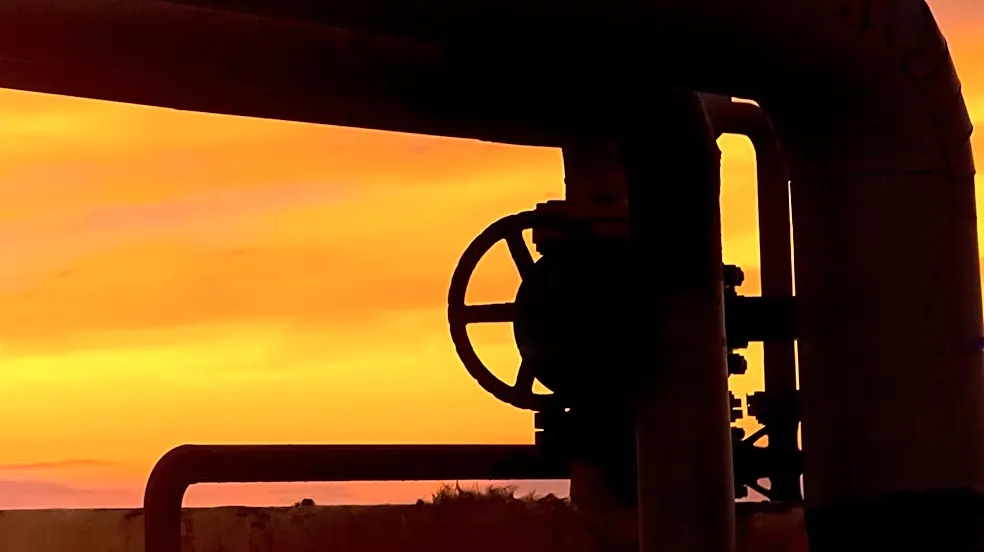
Libya's National Oil Corporation (NOC) has announced a reduction in oil production at its Hamada and Tahara oilfields. This decrease is a direct result of the closure of a pipeline valve that connects these fields to the Zawiya port. According to the NOC,
individuals entered a crude oil receiving station near the Zawiya refinery and manually shut down the valve. Both the Hamada and Tahara oilfields are situated in the Ghadames basin in northwestern Libya. The pipeline in question is operated by the Arabian Gulf Oil Company (AGOCO), a subsidiary of the NOC. The NOC has warned that the continued shutdown will lead to a loss of crude oil production volumes, negatively impacting overall production rates. Under stable conditions, the Hamada field alone produces 50,000 barrels per day (bpd) of oil, 10,000 barrels per day of condensates, and 90 million cubic feet of natural gas daily. The Tahara oilfield, which reopened in 2022, had an initial production rate of 2,500 bpd with an expectation to reach 40,000 bpd. Despite this incident, Libya's total oil output currently remains around 1.4 million barrels per day.
Why It's Important?
This incident underscores the persistent instability and vulnerability of Libya's oil infrastructure, which is critical to the nation's economy. Oil production accounts for approximately 90% of Libya's state revenues, making any disruption a significant threat to its financial stability and recovery efforts. The repeated closures of oil facilities due to political and technical reasons since the 2011 uprising against Muammar Gaddafi highlight a systemic issue that deters foreign investment and consistent production. For the U.S. and global energy markets, disruptions in Libyan oil supply contribute to price volatility and supply concerns, especially when combined with other geopolitical tensions. While Libya's current output of 1.4 million bpd is substantial, incidents like this prevent the country from reaching its full production potential and maintaining a reliable supply to international markets. The inability to secure critical oil infrastructure also reflects broader governance challenges within Libya, impacting its ability to function as a stable energy producer.
What's Next?
The National Oil Corporation has urged relevant authorities to intervene immediately to reopen the valve and secure the site, which would allow technical operations to resume. The swiftness of this intervention will determine the duration and extent of the production loss from the Hamada and Tahara fields. If the shutdown is prolonged, it could lead to a more significant impact on Libya's overall oil output, potentially affecting global oil prices. The incident may also prompt increased security measures around critical oil infrastructure in Libya, though the effectiveness of such measures in a politically fragmented environment remains a challenge. International stakeholders, including the U.S., will likely monitor the situation closely, as stability in Libya's oil sector is crucial for global energy security. The incident could also reignite discussions about the need for a more unified and effective government in Libya capable of protecting its vital economic assets.
Beyond the Headlines
The recurring disruptions to Libya's oil production facilities reveal a deeper struggle for control and stability within the country. These incidents are not merely technical failures but often stem from political grievances, local power struggles, or demands from armed groups. The closure of the pipeline valve by 'individuals' suggests a lack of centralized authority and the continued influence of non-state actors over critical national assets. This situation creates a complex ethical dilemma for international companies and governments engaging with Libya's oil sector, as investments and partnerships are constantly at risk due to internal conflicts. The long-term implications include a potential brain drain of skilled workers from the oil sector and a diminished capacity for Libya to independently manage and develop its vast oil reserves. Ultimately, the stability of Libya's oil production is inextricably linked to its broader political reconciliation and the establishment of a unified, legitimate government capable of exercising control over its territory and resources.