

What's Happening?
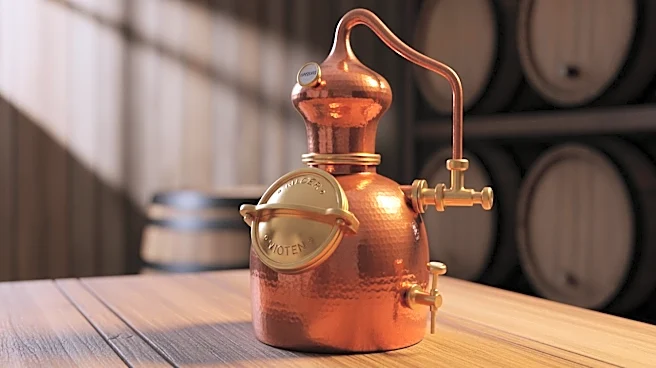
A U.S. appeals court has declared unconstitutional a federal ban on home distilling that has been in place for nearly 158 years. The 5th U.S. Circuit Court of Appeals in New Orleans ruled in favor of the Hobby Distillers Association and four of its members,
who argued that individuals should be allowed to distill spirits at home for personal use or as a hobby. The ban, originally enacted during Reconstruction in 1868, aimed to prevent liquor tax evasion and imposed severe penalties on violators. Circuit Judge Edith Hollan Jones, writing for the three-judge panel, stated that the ban reduced tax revenue by preventing distilling altogether, unlike regulations that allow for taxation on manufactured and labeled spirits. The ruling challenges the government's authority to criminalize in-home activities that might evade tax collection, suggesting it could lead to broader implications for federal power.
Why It's Important?
The court's decision is significant as it challenges longstanding federal authority over personal activities within the home, potentially setting a precedent for other areas where government regulation intersects with individual liberties. This ruling could impact the way federal laws are applied to home-based activities, including remote work and small businesses, by questioning the extent of Congress's power to impose criminal penalties. The decision is seen as a victory for individual liberty, allowing hobbyists to pursue their passion for distilling spirits without fear of legal repercussions. It also raises questions about the balance between government regulation and personal freedom, particularly in areas where taxation and personal hobbies intersect.
What's Next?
The U.S. Department of Justice and the Treasury Department’s Alcohol and Tobacco Tax and Trade Bureau have not yet commented on the ruling, leaving open the possibility of further legal challenges or adjustments to federal regulations. The decision may prompt legislative action to address the implications of the ruling and potentially revise existing laws to better align with modern interpretations of personal freedom and taxation. Stakeholders, including hobbyists and legal experts, will likely continue to monitor the situation as it develops, considering the broader impact on federal regulatory practices.
Beyond the Headlines
The ruling could have deeper implications for the relationship between federal authority and individual rights, particularly in the context of taxation and personal activities. It highlights the ongoing debate over the limits of government power and the protection of personal freedoms, which may influence future legal interpretations and legislative actions. The decision also underscores the evolving nature of legal standards as they adapt to contemporary societal values and technological advancements, potentially affecting other areas of law where personal and governmental interests intersect.