





What's Happening?
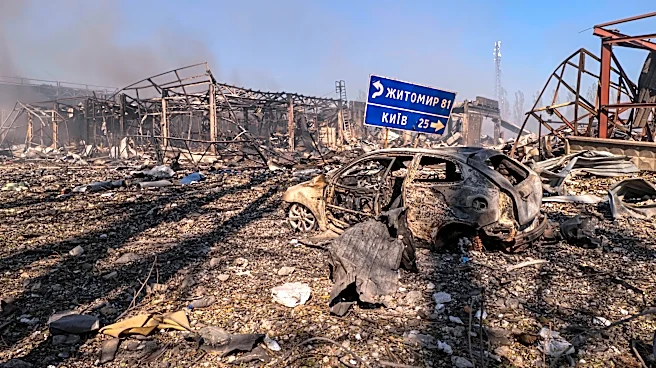
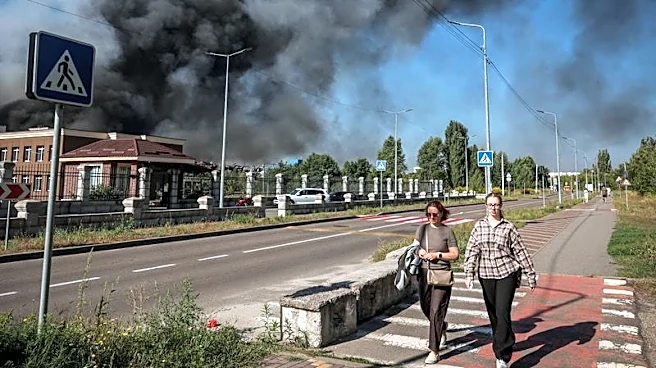
Russian forces have conducted strikes on economically significant infrastructure in Ukraine's Mykolaiv oblast. The targets included a Sandora food production complex, a marine transshipment terminal, a logistics warehouse, and the Trykhaty-330 kV electrical
substation. These attacks, utilizing Geran-4 and other munitions, are part of a broader pattern of intensifying strikes on Ukraine’s civilian logistics and processing backbone. While these specific strikes do not directly affect Black Sea grain corridors, the cumulative damage to Ukraine’s capacity for processing and logistics adds friction to agricultural exports. Mykolaiv is a crucial hub for agricultural processing, storage, and export-related logistics, handling grain, sunflower oil, and other foodstuffs. The damage to a marine transshipment terminal suggests an impact on port-adjacent facilities, which could reduce Ukraine's flexibility in staging and moving export cargoes efficiently.
Why It's Important?
The strikes on Mykolaiv's civilian logistics nodes signal a sustained Russian intent to degrade Ukraine's dual-use infrastructure, which has significant implications for global agricultural markets. Although the direct physical supply loss from a single food plant is modest, the attacks raise the operational risk premium on Ukrainian-origin grain and vegetable oil flows, including corn, wheat, barley, and sunflower oil, through Mykolaiv and surrounding routes. Traders and insurers are expected to factor in higher disruption risks, potentially leading to wider basis and increased freight/inwar risk premia for Black Sea cargoes. Historically, disruptions to Ukraine’s export logistics have caused 2–5% swings in CBOT wheat and Euronext milling wheat prices, with smaller but notable movements in corn and sunflower oil. This current event, while incremental, is likely to create a 1–2% upward bias in Euronext/CBOT grains and Black Sea-origin spreads, adding friction and cost to agri-exports.
What's Next?
The impact of these strikes is expected to be multi-week, adding friction and cost to Ukraine's agricultural exports rather than completely halting flows. The situation could escalate if further attacks significantly disable port operations or power infrastructure on a sustained basis. The increased operational risk premium will likely continue to influence pricing for Ukrainian-origin grain and vegetable oils. Stakeholders in the agricultural sector, including traders and insurers, will need to adjust their risk assessments and pricing strategies for Black Sea cargoes. The ongoing targeting of civilian logistics nodes suggests a continued strategy by Russia to undermine Ukraine's economic capacity, which will likely keep global agricultural markets on edge regarding supply stability from the region.
Beyond the Headlines
These attacks highlight the broader strategy of targeting civilian infrastructure in conflict zones, which has profound ethical and economic implications. Beyond the immediate impact on agricultural prices and supply chains, the degradation of Ukraine's processing and logistics capacity could have long-term effects on its economic recovery and food security. The 'dual-use' nature of these facilities—serving both civilian and potential military logistics—blurs the lines of engagement and complicates international responses. The increased risk premium for Black Sea exports could also incentivize other regions to boost their agricultural production, potentially shifting global trade patterns over time. This situation underscores the vulnerability of global food systems to geopolitical conflicts and the need for resilient supply chains.