






What's Happening?
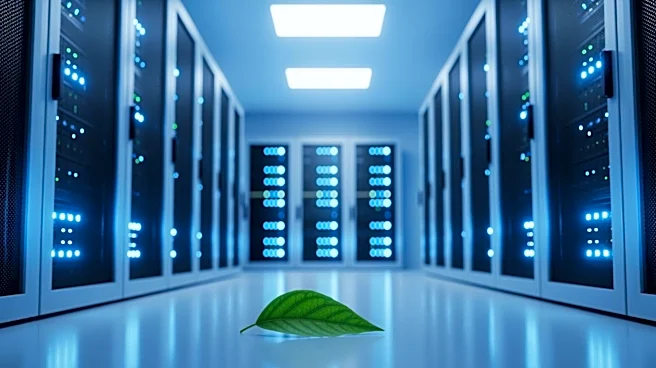
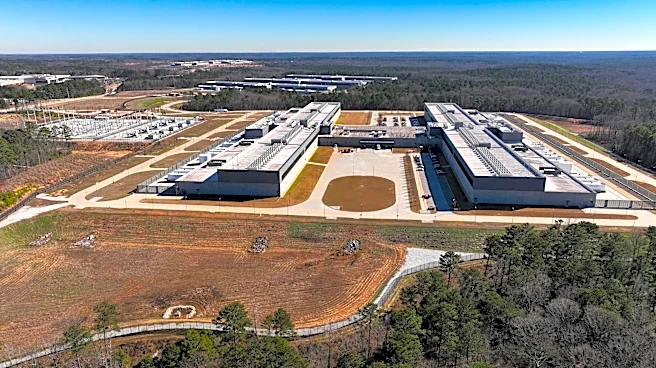
The United Nations University Institute for Water, Environment and Health has released a report warning about the environmental impact of artificial intelligence infrastructure expansion. The report estimates that global data centers could consume 945
terawatt-hours of electricity annually by 2030, nearly doubling France's current annual power consumption. Additionally, water usage associated with AI could reach 9.3 trillion liters annually, equivalent to the basic domestic water needs of 1.3 billion people in Sub-Saharan Africa. The study emphasizes that discussions around AI sustainability have focused too much on carbon emissions, neglecting the growing water and land footprint. Researchers highlight that AI systems' electricity usage also involves indirect water demands due to cooling systems, power generation, and supporting infrastructure.
Why It's Important?
The findings of the UN report underscore the need for integrated planning in AI development that considers water availability, land use, and infrastructure limits. As AI technology continues to expand, the environmental pressures on water and energy resources could have significant global implications. The report suggests that while low-carbon energy solutions may reduce greenhouse gas emissions, they could increase water and land intensity. This highlights the importance of balancing technological advancement with sustainable resource management. The potential strain on water resources is particularly concerning given the existing challenges in regions like Sub-Saharan Africa, where water scarcity is already a critical issue.
What's Next?
The report calls for a shift in focus towards comprehensive sustainability strategies that address the broader environmental impacts of AI. This includes considering the indirect water and land demands associated with AI infrastructure. Policymakers, industry leaders, and environmental groups may need to collaborate to develop regulations and practices that mitigate these impacts. Future discussions on AI sustainability are likely to incorporate these findings, potentially influencing the direction of AI development and resource management policies.
Beyond the Headlines
The report's emphasis on the indirect environmental costs of AI infrastructure could lead to a reevaluation of current sustainability metrics. As AI technology becomes more integrated into various sectors, the need for holistic environmental assessments will grow. This could drive innovation in developing more efficient cooling systems and energy sources that minimize water and land use. Additionally, the report may prompt further research into the long-term ecological impacts of AI, influencing future technological and environmental policies.