




What's Happening?
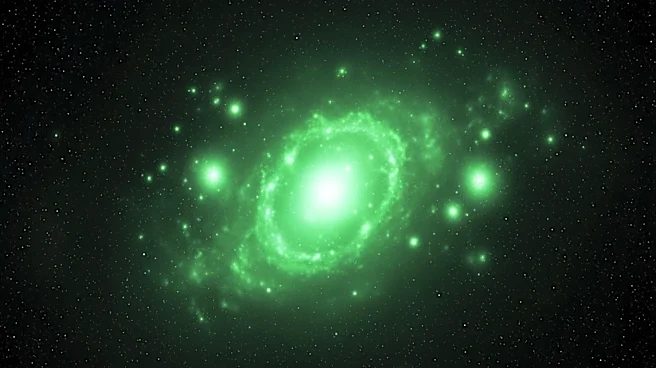
The James Webb Space Telescope has made a groundbreaking observation of one of the universe's earliest galaxies, known as LAP1-B, which dates back approximately 13 billion years. This discovery, published in Nature, provides a rare glimpse into the universe's first
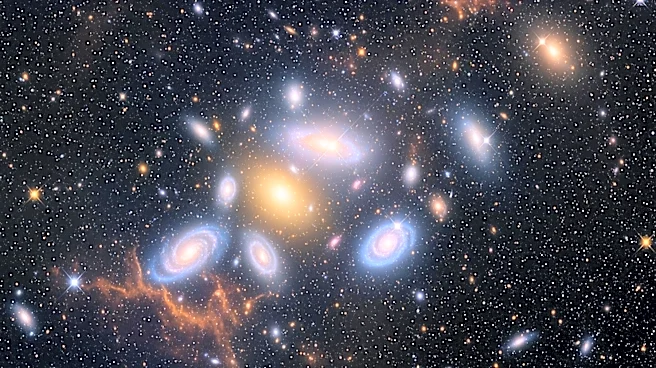
stars and chemically primitive galaxies. The galaxy was detected using gravitational lensing, a phenomenon where a massive cluster of galaxies amplifies the light from distant objects, allowing astronomers to study it in unprecedented detail. The research team used advanced spectroscopic techniques to analyze the light from the galaxy's gas clouds, revealing extremely low levels of heavy elements and a high carbon-to-oxygen ratio, indicative of the universe's first generation of stars, known as Population III stars.
Why It's Important?
This discovery is significant as it provides a chemical fingerprint of the first stars and insights into the early assembly of galaxies. Understanding the composition and formation of these early galaxies helps scientists unravel the processes that transformed the cosmos from a nearly uniform sea of hydrogen and helium into the structured universe observed today. The presence of dark matter, which plays a crucial role in the formation of galaxies, was also detected, reinforcing its importance in cosmic evolution. This research not only enhances our understanding of the universe's origins but also informs models of galaxy formation and evolution, impacting fields such as astrophysics and cosmology.
What's Next?
Future observations with the James Webb Space Telescope are expected to continue exploring the early universe, potentially uncovering more primitive galaxies and further evidence of Population III stars. These findings could lead to a deeper understanding of the role of dark matter in galaxy formation and the chemical evolution of the universe. As more data is collected, scientists aim to refine models of cosmic history and gain insights into the conditions that led to the formation of the first galaxies and stars.
Beyond the Headlines
The discovery of LAP1-B and its characteristics may have broader implications for understanding the distribution and influence of dark matter in the universe. The study of such ancient galaxies could also provide clues about the potential for life in the universe, as the chemical elements produced by the first stars are essential for the formation of planets and life. Additionally, this research highlights the importance of advanced technology and international collaboration in pushing the boundaries of human knowledge about the cosmos.