







What's Happening?
The Center for Strategic and International Studies has released its annual risk analysis, highlighting a growing terrorism threat across Africa. The report, titled 'Global Terrorism Threat Assessment 2026,' identifies the increasing capabilities of al-Qaida
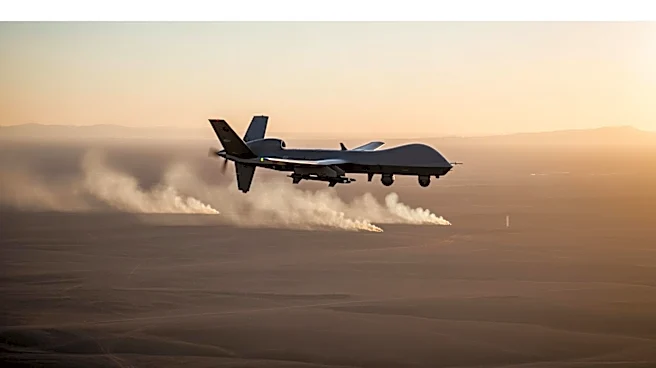
and Islamic State affiliates as a significant concern. African terrorist groups are reportedly expanding their fighting forces and financial resources, and are utilizing advanced technologies such as unmanned aerial systems and artificial intelligence. Al Shabaab, a Somalia-based al-Qaida affiliate, is noted as the most capable terrorist organization in Africa, although it currently poses a low threat to the U.S. homeland. The report also highlights the Islamic State West Africa Province (ISWAP) as a rising power in the region. Despite these threats, the U.S. has reduced its military presence in Africa by 75%, creating intelligence gaps and limiting response capabilities.
Why It's Important?
The reduction of U.S. military forces in Africa could have significant implications for regional stability and global security. As terrorist groups in Africa grow stronger and more technologically advanced, the risk of regional conflicts spilling over into international arenas increases. The U.S. military's diminished presence may hinder its ability to effectively counter these threats, potentially leading to increased instability in Africa. This situation could also impact U.S. interests and allies in the region, as well as global counterterrorism efforts. The report underscores the need for strategic adjustments and increased collaboration with local partners to address these evolving threats.
What's Next?
The U.S. may need to reassess its military strategy in Africa to address the growing terrorism threat. This could involve increasing intelligence capabilities, enhancing partnerships with African nations, and leveraging emerging technologies to counter terrorist activities. The report suggests that a more robust and adaptive approach is necessary to effectively combat the evolving nature of terrorism in Africa. Additionally, international cooperation and support for regional counterterrorism initiatives may become increasingly important in mitigating the threat posed by groups like Al Shabaab and ISWAP.