

What's Happening?
Greenland has recently gained international attention following U.S. President Donald Trump's renewed interest in acquiring the territory from Denmark. Despite Trump's emphasis on partnership rather than possession, Greenland remains a distinctive place
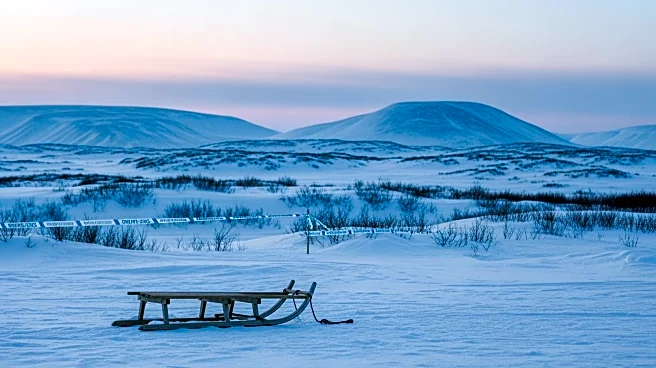
with unique cultural and social characteristics. The island, known for its vast landscapes and small population, offers a lifestyle that combines tradition and modernity. Greenlandic, the primary language, is polysynthetic, allowing single words to convey entire sentences. The close-knit communities mean that identification cards are rarely needed, as most residents know each other personally. Additionally, the small size of towns makes cars unnecessary, with most places accessible by walking or biking. Greenland also lacks global fast-food chains but provides free healthcare and education to its residents.
Why It's Important?
President Trump's interest in Greenland underscores the strategic and geopolitical significance of the territory. Greenland's location and resources make it a valuable asset in the Arctic region, which is becoming increasingly important due to climate change and potential new shipping routes. The cultural and social aspects of Greenland, such as its language and community structure, highlight the challenges and opportunities of integrating such a unique society into broader geopolitical strategies. The focus on Greenland also brings attention to the importance of preserving indigenous cultures and traditions in the face of global interest and potential economic development.
What's Next?
While there are no immediate plans for the U.S. to acquire Greenland, the interest from President Trump may lead to increased diplomatic discussions between the U.S., Denmark, and Greenland. These discussions could focus on strengthening partnerships and exploring mutual benefits in areas such as resource management and environmental protection. The attention on Greenland may also prompt local leaders to advocate for greater autonomy and recognition of their cultural heritage on the international stage.
Beyond the Headlines
The renewed focus on Greenland raises questions about the ethical implications of territorial acquisition and the preservation of indigenous cultures. As global interest in the Arctic grows, there is a need to balance economic development with environmental sustainability and cultural preservation. The unique aspects of Greenlandic society, such as its language and community dynamics, offer valuable lessons in maintaining cultural identity in a rapidly changing world.