



What's Happening?
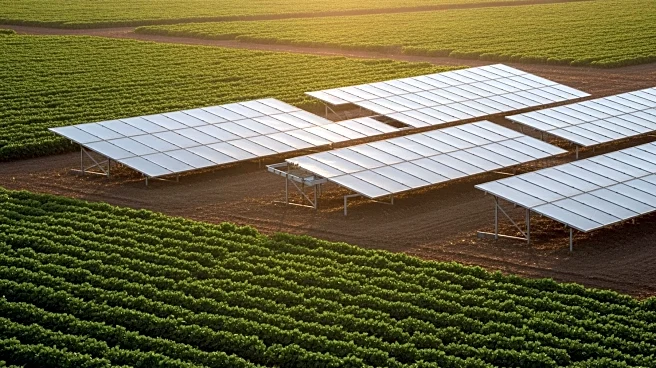
Michigan State University Extension is hosting a webinar series focused on agrivoltaics, an innovative approach that combines agricultural production with solar energy generation. This method involves integrating solar arrays with farming activities,
allowing land to remain productive while also generating renewable energy. The series aims to provide research-backed insights and practical lessons on optimizing crop yields and livestock performance within solar arrays. One of the key presentations, led by Eric Romich from Ohio State University Extension, will discuss findings from the Madison Fields Agrivoltaics Project. This project has been exploring the feasibility of growing grass hay and alfalfa between solar panels, with promising results indicating good nutritive value and successful large-scale application.
Why It's Important?
The integration of solar energy with agriculture, known as agrivoltaics, represents a significant advancement in sustainable farming practices. By allowing land to serve dual purposes—agricultural production and energy generation—agrivoltaics can enhance land use efficiency and contribute to renewable energy goals. This approach is particularly relevant as the demand for clean energy sources grows alongside the need for sustainable agricultural practices. The insights shared in the webinar series could help farmers optimize their operations, potentially leading to increased profitability and reduced environmental impact. As the agriculture sector faces challenges such as climate change and land scarcity, agrivoltaics offers a viable solution to maintain productivity while supporting energy transition efforts.
What's Next?
The webinar series will continue to explore various aspects of agrivoltaics, providing farmers with the knowledge needed to implement these practices effectively. As more data becomes available from projects like Madison Fields, it is expected that agrivoltaics will gain traction among farmers looking to diversify their income streams and reduce their carbon footprint. Future developments may include the expansion of agrivoltaic projects across different regions, tailored to local agricultural and climatic conditions. Stakeholders, including policymakers and agricultural organizations, may also play a role in promoting and supporting the adoption of agrivoltaics through incentives and educational initiatives.