



What's Happening?
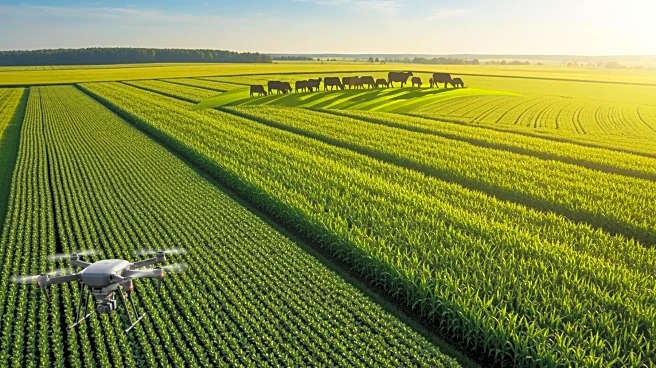
Roraima, a state in Brazil previously known for its isolated forests, is transforming into a significant agricultural frontier. This change is driven by fertile soil, a favorable climate, and strategic planting windows that allow for production during
off-seasons. The integration of soybean, corn, and livestock farming is facilitated by Embrapa's technology, which has been developing adapted cultivars and management practices since the 1980s. The state now boasts a vast expanse of farmland, ideal for agribusiness, with approximately 70% of crops using Embrapa-developed varieties. This has led to increased productivity and stability, attracting producers seeking new agricultural land with long-term potential.
Why It's Important?
The transformation of Roraima into an agricultural hub is significant for Brazil's agribusiness sector, offering new opportunities for growth and expansion. The state's unique combination of fertile soil, favorable climate, and strategic planting windows provides a competitive advantage, allowing for production when other regions are out of season. This can lead to higher market prices for grains and increased income for producers. The integration of crop-livestock-forestry systems enhances efficiency and reduces costs, potentially tripling the number of animals without expanding the area. However, challenges such as energy integration, land regularization, and environmental licensing need to be addressed to fully realize the state's potential.
What's Next?
As Roraima continues to develop its agricultural sector, efforts to overcome existing challenges are crucial. Addressing energy integration, land regularization, and environmental licensing will be key to accelerating growth. Additionally, improving infrastructure and logistics, such as the BR-174 highway and port access, will enhance the state's competitiveness in the global market. Continued support for research institutions and technology development will further bolster Roraima's position as a promising agricultural frontier. Producers with technical skills and long-term vision are likely to find significant opportunities in the state, similar to those offered by Brazil's Midwest in previous decades.
Beyond the Headlines
The expansion of agriculture in Roraima highlights broader implications for sustainable farming practices and environmental management. The integration of crop-livestock-forestry systems not only boosts productivity but also contributes to soil fertility and organic matter enhancement. This model promotes sustainable land use and resource management, potentially serving as a blueprint for other regions facing similar challenges. The state's development also underscores the importance of technological innovation in transforming isolated areas into productive agricultural hubs, offering lessons for global agribusiness strategies.