
What's Happening?
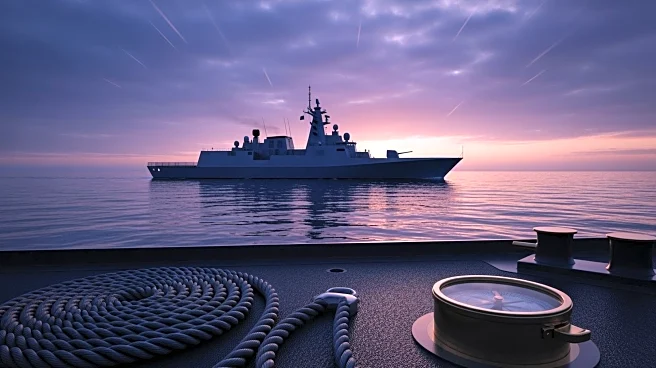
Recent developments in the Red Sea have seen an increase in US naval presence, including the USS Abraham Lincoln carrier strike group and several Arleigh Burke Class guided-missile destroyers. The USS Delbert
D. Black has been added to the fleet, believed to be stationed in the northern Red Sea. This comes amid ongoing naval exercises involving China, Russia, and Iran, with Iran hosting the Exercise Maritime Security Belt 2026 in the northern Indian Ocean. The US Central Command has issued warnings to the IRGC Navy regarding potential aggressive maneuvers during their exercises. Additionally, the IRGC Navy has clarified that its commander, Commodore Alireza Tangsiri, was not killed in a recent explosion in Bandar Abbas, which was reportedly caused by a gas explosion.
Why It's Important?
The bolstering of US naval forces in the Red Sea underscores the heightened tensions in the region, particularly with Iran. The presence of the USS Abraham Lincoln and additional destroyers signals a strategic move to counterbalance the naval exercises conducted by China, Russia, and Iran. This development is crucial for maintaining maritime security and ensuring the safety of international shipping lanes. The US's increased military presence may deter potential aggressive actions by the IRGC Navy, which has been warned against provocative maneuvers. The situation highlights the ongoing geopolitical struggle in the region, with implications for global trade and security.
What's Next?
The naval exercises involving China, Russia, and Iran are set to continue, with the Exercise Maritime Security Belt 2026 scheduled for late February. The US naval forces will likely maintain their presence in the region to monitor and respond to any developments. The IRGC Navy's activities will be closely watched, especially in light of the US Central Command's warnings. Future diplomatic engagements or military actions could arise depending on the outcomes of these exercises and any incidents that may occur.
Beyond the Headlines
The increased military presence in the Red Sea may have long-term implications for regional stability and international relations. The collaboration between China, Russia, and Iran in naval exercises reflects a growing alliance that could challenge US influence in the region. This dynamic may lead to shifts in global power structures and affect international policies regarding maritime security and defense strategies. The situation also raises questions about the effectiveness of diplomatic efforts in resolving tensions and promoting peace in the region.