
What's Happening?
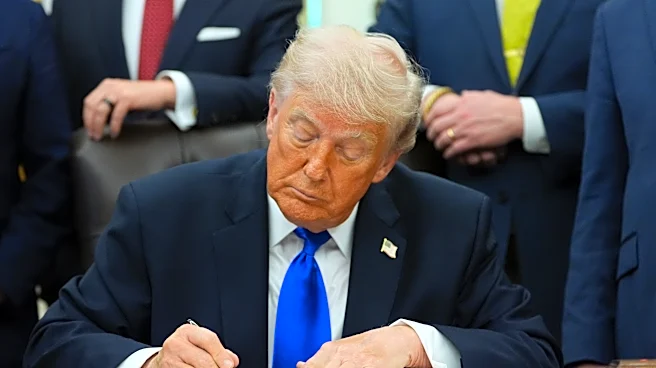
President Donald Trump has announced an increase in tariffs on cars and trucks imported from the European Union to 25 percent, effective next week. This decision comes as a response to what Trump claims
is the EU's failure to comply with a trade agreement established in July 2025, which had set a tariff ceiling of 15 percent on most goods, including automobiles. The European Union has rejected these claims, stating that it is adhering to normal legislative procedures to meet the agreement's terms. This move by the U.S. administration threatens to disrupt one of Europe's key export industries and adds tension to the transatlantic economic relationship.
Why It's Important?
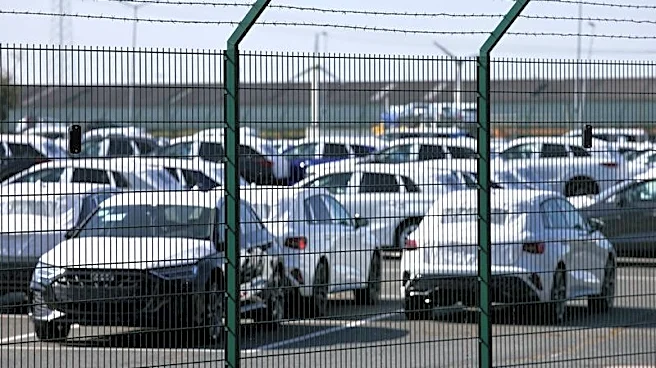
The increase in tariffs is significant as it targets a crucial sector of the European economy, potentially affecting export volumes, profit margins, and investment decisions for European car manufacturers. The automotive industry is a major component of the EU's economic structure, with Germany being particularly vulnerable due to its large car export market. The tariff hike could lead to higher prices for EU-made vehicles in the U.S., impacting consumer choices and sales. Additionally, this development could strain the broader EU-U.S. economic relationship, as it challenges the credibility of previously negotiated trade agreements and may prompt the EU to consider retaliatory measures.
What's Next?
The European Union faces a decision on how to respond to the U.S. tariff increase. Options include further negotiations, formal challenges under trade procedures, or implementing retaliatory tariffs. Each choice carries potential costs and benefits, with retaliation possibly escalating the dispute into other sectors such as steel, aluminum, and machinery. The EU must balance maintaining diplomatic relations with the U.S. while protecting its economic interests. The situation also coincides with the EU's efforts to transition to electric vehicles and manage competition from other global producers, adding complexity to the decision-making process.