


What's Happening?
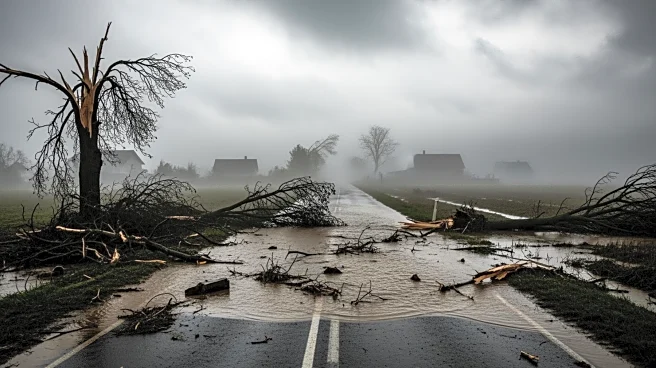
A severe winter storm has left the residents of Lytle Creek, a mountain community in San Bernardino County, California, in a dire situation. The storm, which hit on Christmas Eve, caused significant flooding that washed out roads and damaged a critical
bridge, leaving the 280 residents of the Happy Jack neighborhood stranded. Despite an evacuation warning, many residents were unable to leave due to the impassable roads. County public works crews have been working to construct a temporary bridge to restore access, but as of Sunday, it was still under construction and awaiting safety approval from an engineer. The storm has also caused extensive damage to homes, with approximately 30 houses deemed unsafe due to debris flows. Power has been shut off in these homes, and residents are dealing with significant mud infiltration. Volunteers, including members of the Sunrise Church in Rialto, have been assisting in clearing mud from affected homes.
Why It's Important?
The situation in Lytle Creek highlights the vulnerability of mountain communities to severe weather events, which are becoming more frequent and intense due to climate change. The damage to infrastructure and homes underscores the need for improved emergency preparedness and response strategies in such areas. The inability of residents to evacuate due to washed-out roads raises concerns about the adequacy of current infrastructure to withstand extreme weather. The incident also draws attention to the broader implications of climate change on community safety and resilience. The efforts of volunteers and local authorities to assist affected residents demonstrate the importance of community support and coordination in disaster response.
What's Next?
The immediate priority is to complete the temporary bridge to allow residents to safely leave the area and for emergency services to access the community. An engineer is expected to assess the bridge's safety soon. In the longer term, there may be discussions about reinforcing infrastructure to better withstand future storms. Local authorities and residents will likely need to evaluate and improve their emergency preparedness plans. Additionally, there may be a need for state or federal assistance to support recovery efforts and infrastructure improvements.
Beyond the Headlines
The storm's impact on Lytle Creek also highlights the often-overlooked plight of animals during natural disasters. Many pets and local wildlife have been affected, with some animals found sheltering in unusual places. This aspect of disaster response is crucial, as it involves not only the immediate rescue and care of animals but also long-term considerations for their safety and well-being. The incident may prompt discussions on integrating animal rescue and care into broader emergency management plans.