



What's Happening?
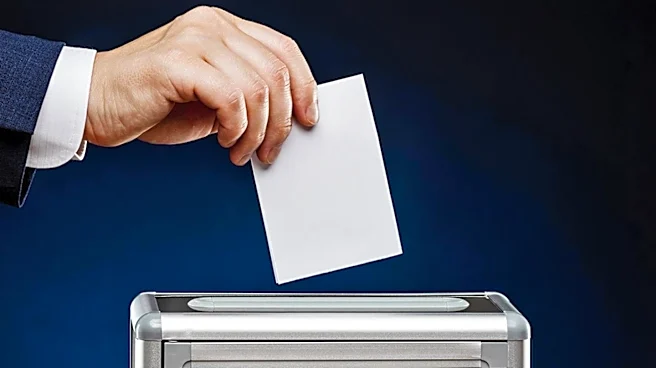
As Florida's primary election approaches, voters are being reminded of the requirements and procedures for casting their ballots. Scheduled for August 18, the election will see significant local races, including the mayoral race in St. Petersburg and Congressional
District 16. Voters are required to present a valid photo ID with a signature at the polls. Acceptable forms include a Florida driver's license, U.S. passport, and military ID, among others. If a voter lacks proper identification, they can still vote using a provisional ballot. The state has provisions to protect voters from intimidation and interference, with legal recourse available for those who face challenges at the polls. Additionally, Florida law allows convicted felons to vote if their rights have been restored.
Why It's Important?
The primary election in Florida is a critical event that could influence the political landscape, particularly in local governance and representation. The voter ID requirements are part of a broader national debate on election integrity and voter access. Proponents argue that these measures prevent fraud, while opponents claim they may suppress voter turnout, particularly among marginalized groups. The outcome of these elections could impact policy decisions on issues such as education, healthcare, and economic development. Moreover, the handling of voter ID laws and provisional ballots could set precedents for future elections, affecting how voter rights are protected and challenged.