




What's Happening?
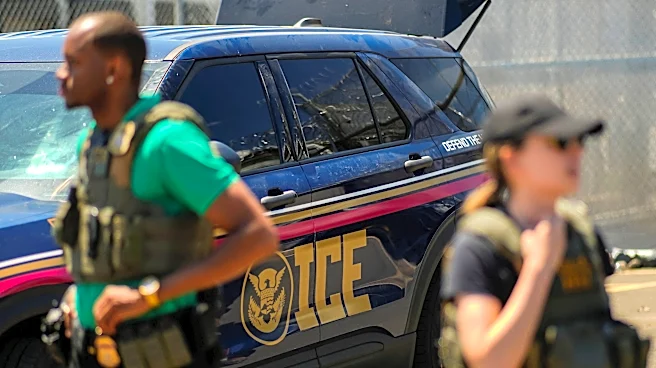
Christian Castro, an Immigration and Customs Enforcement (ICE) officer, was arrested by Minnesota law enforcement in Minneapolis, one day before he was scheduled to appear in federal court on charges related to making false statements. Castro was apprehended
during a traffic stop near his attorney's office and is currently held at the Hennepin County Jail. This arrest follows a previous attempt by Minnesota to extradite Castro from Texas to face assault charges, which was rejected by Texas Governor Greg Abbott. The state charges stem from an incident where Castro allegedly shot Julio Sosa-Cellis through a closed door during 'Operation Metro Surge' and subsequently provided false accounts of the event. Federal charges for false statements were later filed against Castro after his release from Texas custody.
Why It's Important?
This development highlights the complex interplay between state and federal jurisdictions, particularly concerning law enforcement accountability. The initial refusal by Texas Governor Greg Abbott to extradite Castro to Minnesota underscored potential political and legal tensions between states and the federal government regarding the prosecution of federal agents. Castro's subsequent federal charges for false statements, while less severe than the initial assault charges, demonstrate a continued effort to hold him accountable. The arrest by Minnesota authorities, despite the prior extradition denial, signifies the state's persistence in pursuing justice for the alleged assault. This case could set precedents for how federal officers are held responsible for actions taken during federal operations, especially when those actions lead to state-level criminal allegations.
What's Next?
Christian Castro is scheduled to make his first appearance in Hennepin County District Court on Thursday afternoon, following his arrest by Minnesota law enforcement. This state court appearance will precede his previously scheduled federal court appearance. The Hennepin County District Attorney's office will likely proceed with the assault charges, which were the basis for the initial extradition request. Given that the state and federal charges do not overlap, Castro could potentially face legal proceedings in both jurisdictions. The outcome of these cases could influence future policies regarding the accountability of federal agents and the extent of state authority in prosecuting federal officers for alleged crimes committed within their borders.
Beyond the Headlines
The arrest of Christian Castro delves into deeper implications concerning the balance of power between state and federal law enforcement, and the concept of accountability for federal agents. The initial incident, occurring during 'Operation Metro Surge,' reflects a period of heightened federal presence in cities, often leading to confrontations and questions about the scope of federal authority. The fact that a New York Times investigation, including video footage, contradicted Castro's account of the shooting raises ethical questions about truthfulness in law enforcement reporting and the potential for abuse of power. The victim's experience, where charges against him were dropped and federal officials investigated the agents, underscores the challenges individuals face when confronting federal authority. This case could contribute to ongoing debates about police violence, federal overreach, and the mechanisms available for civilian redress.