




What's Happening?
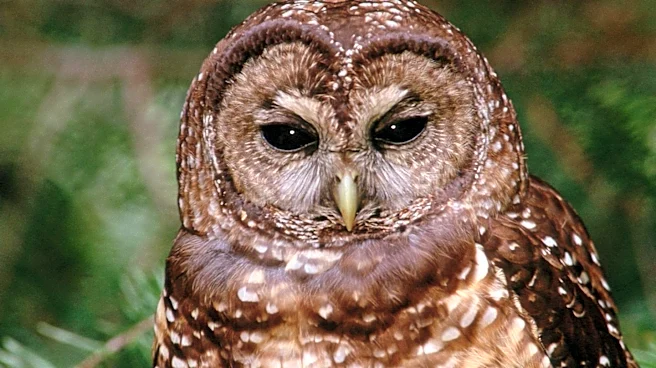
A new study by the Integral Ecology Research Center reveals that invasive barred owls pose a significant threat to the northern spotted owl population in California's old-growth forests. Using GPS trackers, researchers found that barred owls occupy the same
high-quality nesting and roosting habitats as spotted owls, leading to competition for resources. The study highlights that managing barred owl populations can restore habitat for spotted owls, as removing barred owls reopens areas for spotted owl recolonization. The research emphasizes the need for ongoing management to protect the old-growth ecosystem.
Why It's Important?
The study underscores the ecological impact of invasive species on native wildlife and habitats. The presence of barred owls in California's forests threatens the survival of the northern spotted owl, a species already facing challenges due to habitat loss. Effective management of barred owl populations is crucial for the conservation of spotted owls and the preservation of biodiversity in old-growth forests. The findings support ongoing efforts to control invasive species and highlight the importance of maintaining ecological balance to protect vulnerable species and ecosystems.
What's Next?
Conservation efforts will likely focus on implementing strategies to manage barred owl populations and protect spotted owl habitats. Collaboration between research institutions, government agencies, and conservation organizations will be essential to develop and execute effective management plans. The study's findings may also inform policy decisions and funding allocations for conservation initiatives. Continued research and monitoring will be necessary to assess the long-term impact of management efforts and ensure the recovery of spotted owl populations in California's old-growth forests.