



What's Happening?
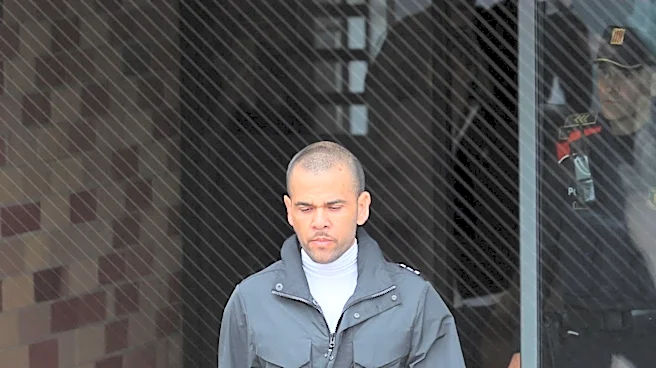
The Kent County Prosecutor's Office has dismissed a felony charge against Emran Sharifi, who was accused of assaulting, resisting, or obstructing a police officer causing serious impairment of a body function. The charge stemmed from an incident where
a Grand Rapids police officer broke his leg during Sharifi's arrest. The decision to dismiss the charge came after Kent County Prosecutor Chris Becker reviewed the preliminary hearing transcript and body-camera videos. During the hearing, Sharifi's defense team presented evidence of a 'bet' among officers regarding arrest quotas. Officer Richard Lee was heard on body camera video discussing a 'quota' of 20 arrests over three days, which Becker deemed 'extremely problematic' and inappropriate, even if intended as a joke. The incident began with a traffic stop for a turn signal violation, where Sharifi, a passenger, was arrested for refusing to provide identification after being observed without a seatbelt.
Why It's Important?
This dismissal is highly significant as it raises serious questions about police conduct, accountability, and the validity of arrests when internal 'quotas' or 'bets' are involved. Prosecutor Becker's statement highlights the ethical and legal implications of such practices, indicating that they can undermine the credibility of an arrest and make it impossible to prove charges beyond a reasonable doubt. This case could set a precedent for how similar incidents are handled in the future, potentially leading to increased scrutiny of police department policies and training regarding arrest targets. For the public, it reinforces the importance of transparency and oversight in law enforcement, ensuring that arrests are based on legitimate legal grounds rather than internal incentives. It also underscores the power of body-camera footage in providing crucial evidence that can influence legal outcomes and hold officers accountable.
What's Next?
While the charge against Emran Sharifi has been dismissed, the implications for the Grand Rapids Police Department (GRPD) and broader police practices are likely to continue. The prosecutor's strong condemnation of the 'bet' comments suggests that internal reviews or policy changes within the GRPD might be necessary to address the culture around arrest quotas. This incident could prompt calls for greater transparency and accountability from community groups and civil rights organizations. It may also lead to increased public distrust in law enforcement if not adequately addressed. Future cases involving similar allegations of improper police conduct or arrest incentives will likely face heightened scrutiny from prosecutors and defense attorneys, potentially influencing how arrests are made and prosecuted in Grand Rapids and beyond.
Beyond the Headlines
This case delves into the deeper issue of police culture and its impact on justice. The concept of 'quotas' or 'bets' among officers, even if presented as jokes, can foster an environment where arrests are prioritized over due process and individual rights. This can lead to situations where minor infractions escalate into serious confrontations, as seen in Sharifi's arrest for a seatbelt violation and refusal to identify himself. The defense's argument that this 'results from a culture of bets and quotas, and officers who treat policing as a contact sport' points to a systemic problem that can erode public trust and lead to disproportionate use of force. This incident serves as a critical reminder of the ongoing need for police reform, emphasizing ethical conduct, de-escalation training, and policies that prioritize community safety and constitutional rights over arbitrary arrest targets.