



What's Happening?
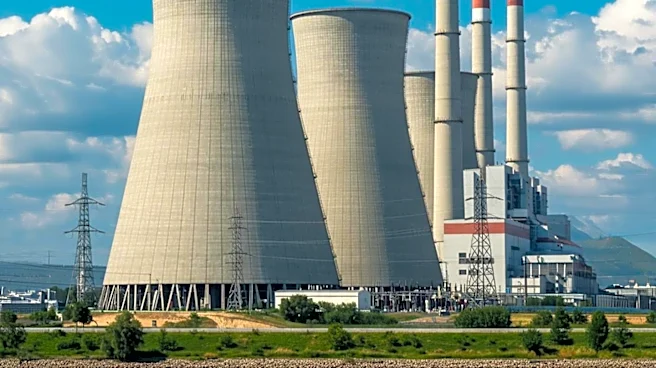
The South China Regional Office of Nuclear and Radiation Safety Inspection, under the Ministry of Ecology and Environment, recently held a regulatory dialogue with State Nuclear Power Zhanjiang Nuclear Power Co., Ltd. This meeting addressed prominent
issues identified in recent supervisory inspections and reviewed the overall regulatory situation. Representatives from Zhanjiang Nuclear Power and the general contracting unit provided updates on various initiatives, including collaborative Party organization development, on-site work resumption progress, special nuclear safety management improvement actions, and plans for optimizing the design of Units 1 and 2 and subsequent units. The discussions focused on clarifying improvement directions and specific preventive measures to ensure high-level nuclear safety regulation and promote the quality development of China's nuclear energy industry.
Why It's Important?
This regulatory dialogue underscores China's commitment to maintaining stringent nuclear safety standards amidst its rapid nuclear power expansion. The proactive engagement between the regulatory body and the operating company highlights a focus on continuous improvement and risk mitigation in a critical industry. For the U.S. and other international observers, such dialogues provide insight into China's internal governance and safety protocols for its growing nuclear fleet. Effective nuclear safety regulation is paramount globally, as incidents can have far-reaching environmental and economic consequences. The emphasis on 'design serving the site' and 'early detection, early reporting, and early handling of problems' reflects best practices in nuclear safety, which are crucial for public trust and international cooperation in nuclear energy. The outcomes of these regulatory efforts will influence perceptions of China's nuclear program on the global stage.
What's Next?
The South China Regional Office has committed to adhering to strict standards and continuously strengthening quality control throughout the entire lifecycle of nuclear projects. This includes closely monitoring the implementation of operating organizations' responsibilities and ensuring closed-loop management to prevent the recurrence of problems. Future actions will likely involve continued on-site verifications and regulatory oversight at key construction areas, such as the Guangdong Lianjiang Nuclear Power Project. The focus will remain on ensuring that nuclear safety is the highest priority, with responsibilities clearly defined and enforced at every level. These ongoing regulatory efforts are essential for safeguarding the high-quality development of China's nuclear energy industry and maintaining public and international confidence in its nuclear power program.
Beyond the Headlines
The regulatory dialogue extends beyond immediate safety concerns, touching upon the broader integration of Party organization pairing within state-owned enterprises, which is a unique aspect of China's governance model. This suggests that political oversight and ideological alignment are considered integral to operational excellence, even in highly technical fields like nuclear energy. The emphasis on 'ideological defense line of nuclear safety culture' indicates a holistic approach that combines technical protocols with organizational culture and political directives. This approach could influence how China manages other critical infrastructure projects and its engagement with international regulatory bodies. The long-term implication is a system where technical safety is intertwined with political and organizational discipline, potentially offering a different model for nuclear governance compared to Western frameworks.