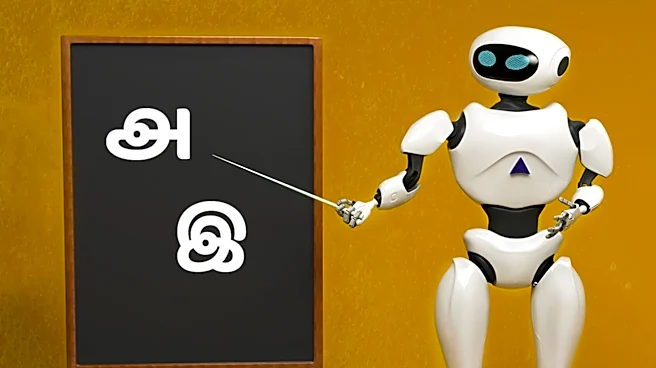




What's Happening?
The Brookings Institution has raised concerns about the potential negative impacts of overreliance on artificial intelligence (AI) on children's learning and development. According to their research, AI can support educational processes but also poses
a risk by potentially replacing critical thinking and reasoning skills. The institution warns that excessive dependence on AI tools could undermine children's foundational development, as students might skip essential learning steps such as drafting and reasoning. This concern is echoed by educators who note that while AI can facilitate learning, it should not replace the cognitive processes that are crucial for developing critical thinking skills.
Why It's Important?
The implications of AI in education are significant, as they affect how future generations will learn and develop essential skills. If AI tools are used improperly, they could lead to a decline in critical thinking abilities among students, which are vital for problem-solving and innovation. This could have long-term effects on the workforce and economic competitiveness, as well as on individual students' ability to navigate complex challenges. The Brookings Institution's warning highlights the need for educators and policymakers to carefully consider how AI is integrated into educational settings to ensure it enhances rather than detracts from learning.
What's Next?
Educators and policymakers may need to develop guidelines and frameworks for the responsible use of AI in education. This could involve training teachers to effectively integrate AI tools into their teaching while maintaining a focus on developing students' critical thinking skills. Additionally, there may be a push for more research into the long-term effects of AI on learning and development, as well as the creation of educational policies that balance technological advancement with the preservation of essential cognitive skills.