
What's Happening?
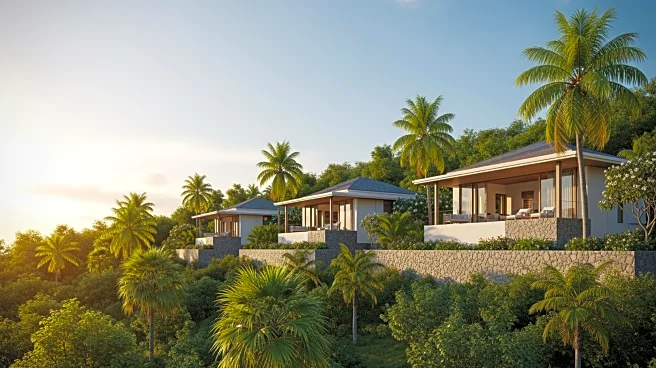
PT Lyvin Properties Indonesia is nearing the completion of its flagship development, Lyvin Melasti, in southern Bukit, Bali. The project, set for full completion by March 2026, reflects a shift in Bali's
property market towards low-density, design-led projects with integrated hospitality services. Alexander Sokovykh, founder and CEO of Lyvin Properties, noted that buyers now prioritize space, privacy, and quality of the living environment. The development spans three hectares of ocean-view land, featuring 18 single-storey villas and a building with 20 ocean-view suites, with over half the land preserved as green space. The project aims to align with Bali's premium property cycle, offering amenities such as a panoramic restaurant, spa, gym, and family facilities. Sustainability is a key focus, with living green roofs and locally sourced materials.
Why It's Important?
The development of Lyvin Melasti highlights a significant trend in Bali's property market, where higher-spending visitors and long-stay travelers demand more than standard villa products. This shift towards low-density luxury projects could redefine property expectations in Bali, emphasizing intelligent planning and responsible building. The project also integrates residential ownership with professional hotel management, appealing to buyers seeking turnkey assets that serve as both residences and investments. As Bali continues to attract premium tourism, developments like Lyvin Melasti could set new standards for property value and sustainability, influencing future projects in the region.
What's Next?
Lyvin Melasti is expected to complete by March 2026, coinciding with the next phase of Bali's premium property cycle. The project aims to attract higher-spending travelers and investors, benefiting from growth in dining, wellness, and lifestyle infrastructure in Uluwatu. As the market becomes more selective, Lyvin Properties plans to maintain its boutique approach, focusing on fewer projects with competitive quality. The company aims to protect long-term value by limiting density and integrating essential infrastructure, setting a precedent for future developments in Bali.