
What's Happening?
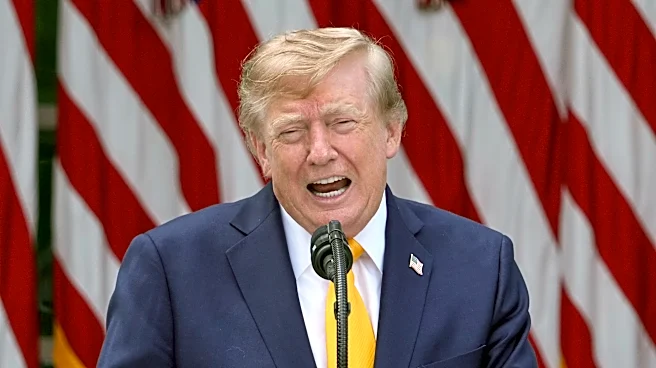
President Trump's public approval rating has fallen to a record low of 33%, according to a Reuters/Ipsos poll that concluded on Monday. This marks the second consecutive survey where his approval has remained
at this level, the lowest recorded during his first or second term. The decline in President Trump's popularity is largely attributed to the ongoing war with Iran, which began with U.S.-Israeli attacks on Iran on February 28. Public support for U.S. military action against Iran has dropped to 31%, down from 37% in March and 34% earlier this month. The decrease in support is particularly notable among self-identified Republicans, with only 69% now backing the conflict, compared to 77% in March. The war has also contributed to high U.S. gasoline prices, which are more than a dollar higher per gallon than before the conflict, as Iran has maintained a de facto blockade of oil exports from the region. President Trump had campaigned on promises to control inflation and avoid lengthy military conflicts, making the current situation a challenge for his administration and Republican allies facing midterm elections.
Why It's Important?
The significant drop in President Trump's approval rating and the declining public support for the war with Iran have critical implications for the U.S. political landscape and upcoming elections. A sustained low approval rating can weaken a president's political capital, making it harder to pass legislation, garner support for policies, and influence public discourse. The erosion of support for the Iran war, even among Republicans, suggests a growing public weariness with prolonged military engagements and their economic consequences. High gasoline prices, directly linked to the conflict, are a tangible economic burden on American households and businesses, potentially fueling voter dissatisfaction. This sentiment could significantly impact the November 3 midterm elections, where Republican congressional majorities are already narrow. The poll's finding that independent voters favor Democrats over Republicans (33% to 19%) for congressional elections further underscores the potential for a political shift. The administration's challenge lies in managing public perception of the war and its economic fallout, especially given President Trump's prior campaign promises regarding inflation and military conflicts.
What's Next?
With President Trump's approval at a record low and public support for the Iran war waning, the administration faces increasing pressure to address the conflict and its economic repercussions. Treasury Secretary Scott Bessent has announced a possible expansion of sanctions on countries doing business with Iran, indicating a continued focus on economic pressure rather than military escalation. However, the administration has stopped short of imposing new penalties, highlighting the complexities of the conflict. The upcoming midterm elections on November 3 will serve as a crucial test of public sentiment regarding the war and the administration's performance. Republican candidates will likely need to articulate a clear strategy for the conflict and its economic impact to retain their narrow congressional majorities. The ongoing blockade of oil exports from the region by Iran suggests that gasoline prices may remain elevated, continuing to be a significant concern for voters. The administration will likely continue to seek ways to de-escalate the conflict or achieve a resolution that can be presented as a success to the American public, while also managing the domestic economic challenges posed by the war.
Beyond the Headlines
The decline in public support for the Iran war and President Trump's approval rating highlights a broader societal trend of skepticism towards prolonged military interventions and their associated costs. This sentiment reflects a shift in the American public's willingness to bear the economic and human tolls of international conflicts, particularly after years of engagement in the Middle East. The direct link between the war and rising gasoline prices underscores how global geopolitical events can have immediate and tangible impacts on the daily lives of American citizens, influencing their political views and voting behavior. This situation also brings into focus the challenge for political leaders to maintain public consensus for foreign policy actions, especially when those actions contradict campaign promises or lead to domestic economic hardship. The erosion of support among a president's own party, as seen with Republicans and the Iran war, suggests a potential fracturing of traditional political alignments when core economic interests are perceived to be at stake. This could lead to a re-evaluation of foreign policy doctrines and a greater emphasis on domestic economic stability in future political discourse.