







What's Happening?
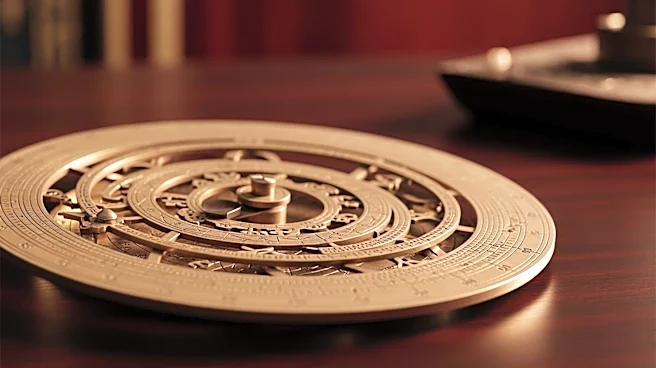
A 17th-century astrolabe, crafted in Lahore in 1612, is set to be auctioned at Sotheby’s London on April 29. This historical piece, weighing nearly 20 pounds and with a diameter comparable to a large cooking pot, is expected to fetch between £1.5 million
and £2.5 million ($2 million to $3.4 million). The astrolabe, a sophisticated brass instrument used for astronomical calculations, was made by Qa’im Muhammad and Muhammad Muqim, brothers from a renowned family workshop. It is one of only two known astrolabes by these craftsmen, with the other housed in the National Museum of Iraq. The piece was commissioned by Aqa Afzal, a prominent figure in the Mughal empire, and later owned by the last ruling king of Jaipur, Maharaja Sawai Man Singh II.
Why It's Important?
The auction of this astrolabe highlights the enduring value and fascination with historical scientific instruments. Astrolabes are considered precursors to modern computers due to their ability to perform complex calculations. This particular piece not only represents a significant cultural artifact from the Mughal empire's golden age but also underscores the historical connections between science, art, and politics. Its potential to set a new auction record reflects the growing interest and investment in rare historical items, which can influence the art market and collectors' strategies. The sale could also enhance appreciation for the technological advancements of past civilizations and their contributions to modern science.
What's Next?
If the astrolabe achieves its estimated price, it could set a new benchmark for similar historical artifacts, potentially increasing their market value. Collectors and museums may become more interested in acquiring such pieces, leading to more discoveries and auctions of similar items. Additionally, the sale could prompt further scholarly research into the history and significance of astrolabes, particularly those from the Mughal period. The outcome of the auction may also influence future exhibitions and educational programs focused on the intersection of science and art in historical contexts.