

What's Happening?
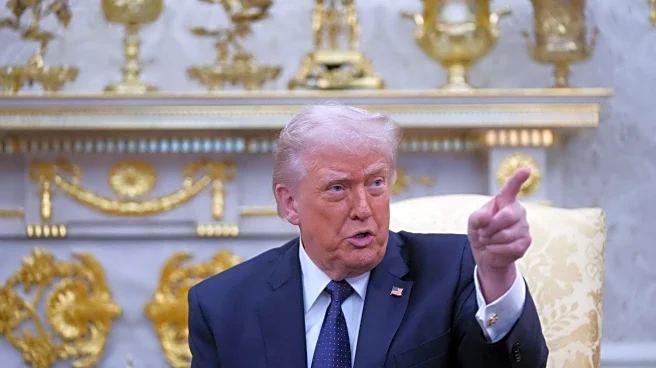
President Trump convened a meeting with executives from major defense companies at the White House as the conflict with Iran entered its seventh day. This meeting underscores the administration's focus on military readiness and strategic planning in response
to the ongoing hostilities. The gathering included discussions on defense strategies and potential military contracts, reflecting the heightened state of alert and the need for sustained military support. The meeting was part of a broader effort to ensure that the U.S. military remains well-equipped and prepared for any developments in the conflict. The presence of key defense industry leaders highlights the importance of public-private partnerships in national defense, especially during times of international tension.
Why It's Important?
The meeting between President Trump and defense executives is significant as it highlights the critical role of the defense industry in supporting U.S. military operations. The ongoing conflict with Iran has implications for national security and defense spending, potentially leading to increased military contracts and production. This engagement also signals to international allies and adversaries that the U.S. is committed to maintaining its military capabilities. For the defense industry, this could mean a surge in demand for military equipment and technology, impacting jobs and economic activity within the sector. The meeting underscores the administration's reliance on defense contractors to support military operations and strategic objectives.
What's Next?
As the conflict with Iran continues, further meetings and strategic discussions are likely to occur between the government and defense industry leaders. The administration may announce new defense contracts or initiatives aimed at bolstering military readiness. Additionally, there could be increased scrutiny from Congress and the public regarding defense spending and the implications of prolonged military engagement. The outcome of these discussions could influence future U.S. foreign policy and defense strategies, as well as impact the global defense market.