






What's Happening?
The duration an individual can be held by Immigration and Customs Enforcement (ICE) before deportation varies significantly depending on the stage of their removal proceedings. An immigration detainer, which is a request from the Department of Homeland
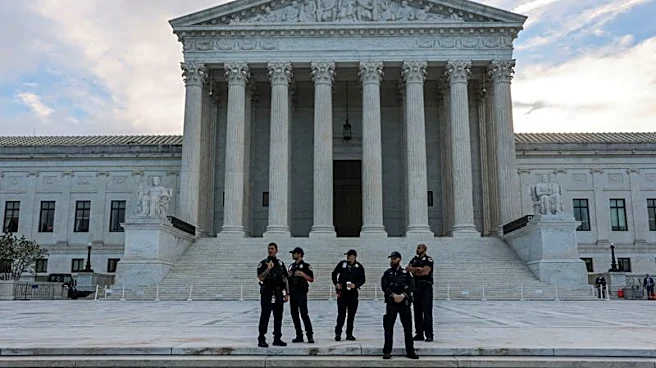
Security for a jail or prison to hold someone briefly, allows for a maximum of 48 hours beyond the time they would otherwise be released, excluding weekends and holidays. This 48-hour limit applies to the jail, not ICE. Once ICE assumes custody, this detainer clock ends. For individuals in ICE custody without a final removal order, there is no fixed end date for detention, as authorized by 8 U.S.C. § 1226(a), though release on bond or conditional parole is possible in some cases. However, 8 U.S.C. § 1226(c) mandates detention for individuals with specific criminal grounds. After a final removal order is issued, a 90-day removal period begins, as per 8 U.S.C. § 1231(a)(1). Detention can extend beyond this 90-day period under § 1231(a)(6) for certain categories, such as those deemed a risk to the community or unlikely to comply. The Supreme Court case Zadvydas v. Davis (2001) established that post-removal-period detention is limited to a presumptively reasonable period of six months, after which the burden shifts to the government to prove a significant likelihood of removal in the foreseeable future.
Why It's Important?
Understanding the varying detention periods is crucial for individuals and their families navigating the U.S. immigration system. The distinction between a jail's 48-hour detainer and ICE's potentially much longer detention periods highlights the complexity and often opaque nature of immigration law. The lack of a fixed end date for detention before a removal order can lead to prolonged uncertainty and hardship for detainees and their families. The Supreme Court's ruling in Zadvydas v. Davis provides a critical safeguard against indefinite detention, ensuring that individuals cannot be held indefinitely if their removal is not reasonably foreseeable. This ruling underscores the importance of legal representation, especially during the initial stages of detention, as the window for effective intervention can be narrow. The differing rules and interpretations across jurisdictions and circuits, particularly regarding bond eligibility, further complicate the process, making expert legal counsel essential for protecting the rights of those in custody.
What's Next?
For individuals currently in ICE custody, the immediate next step often involves securing legal representation to understand their specific situation and explore available options, such as bond hearings or challenging removal orders. Given the dynamic nature of immigration law, particularly regarding bond eligibility, continuous monitoring of legal developments and court rulings is necessary. The Supreme Court's precedent in Zadvydas v. Davis means that after approximately six months of post-removal-order detention, if removal is not significantly likely, the government must provide evidence to justify continued detention. This places a burden on the government and offers a potential avenue for release for detainees whose home countries will not issue travel documents. Legal teams will continue to advocate for their clients, leveraging these legal frameworks to prevent indefinite detention and ensure due process. The ongoing legal battles and varying interpretations across circuits suggest that the landscape of ICE detention policies will remain a subject of litigation and potential legislative changes.
Beyond the Headlines
The varying and often lengthy periods of ICE detention raise significant ethical and humanitarian concerns. The practice of holding individuals, sometimes for extended periods, without a clear timeline or resolution, can have profound psychological and social impacts on detainees and their families. The emphasis on speed in detention cases, as highlighted by legal experts, underscores the vulnerability of individuals who may not have immediate access to legal counsel. The system's complexity can create a sense of powerlessness, particularly for those unfamiliar with U.S. legal procedures or who face language barriers. The Zadvydas ruling, while providing a limit to indefinite detention, still allows for substantial periods of confinement. This situation prompts broader questions about the balance between national security, immigration enforcement, and individual liberties, and the extent to which the U.S. legal system adequately protects the rights of all individuals within its borders, regardless of their immigration status.