



What's Happening?
In Minnesota, communities have been actively resisting federal immigration enforcement operations, particularly in response to the Trump administration's aggressive deportation policies. The state has seen a significant federal presence, with 3,000 masked
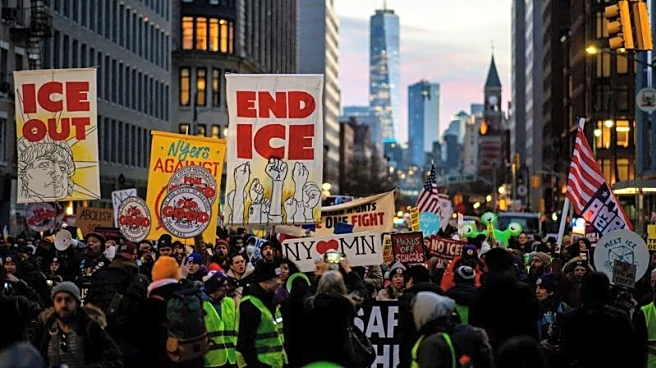
agents involved in immigration enforcement, leading to the arrest of numerous individuals, including U.S. citizens. In response, local residents have organized non-violent resistance efforts, such as distributing whistles to warn of Immigration and Customs Enforcement (ICE) agents' presence and setting up mutual aid networks to support affected families. These efforts are part of a broader movement against the federal government's Operation Metro Surge, which has been criticized for its impact on immigrant communities and civil rights violations.
Why It's Important?
The situation in Minnesota highlights the tension between federal immigration policies and local community responses. The aggressive enforcement actions have sparked widespread protests and resistance, emphasizing the importance of community solidarity in protecting vulnerable populations. The economic impact of these operations is significant, with estimated losses of $203 million to local businesses. This scenario underscores the broader national debate on immigration policy and the role of federal versus local authority. The resistance in Minnesota serves as a potential model for other cities facing similar federal actions, demonstrating the power of organized, non-violent community responses.
What's Next?
As Operation Metro Surge winds down, with most federal agents expected to leave Minnesota, the focus will likely shift to assessing the long-term impacts of the operation. Community networks continue to provide support, and there may be increased efforts to hold federal agencies accountable for civil rights violations. Legal challenges and policy proposals aimed at protecting immigrant rights and limiting federal overreach are expected to continue. The situation in Minnesota could influence future federal immigration strategies and local responses across the U.S.
Beyond the Headlines
The events in Minnesota reveal deeper issues related to federal immigration enforcement, including the ethical implications of aggressive deportation tactics and the potential for civil rights abuses. The community's response highlights the importance of grassroots organizing and the role of local institutions, such as churches and advocacy groups, in providing support and protection. This situation also raises questions about the balance of power between federal and local authorities and the effectiveness of non-violent resistance in enacting change.