






What's Happening?
The Artemis II mission, conducted by NASA, has set a new record for the farthest distance humans have traveled from Earth. On April 6, 2026, the crew aboard the Orion capsule surpassed the previous record set by Apollo 13 in 1970. The mission involved
a lunar flyby, during which the crew reached a distance of 252,756 miles from Earth. This historic event was marked by the crew's emotional moment as they suggested names for two previously unnamed lunar landmarks. The mission included a pre-lunar flyby science conference to optimize camera configurations for capturing the Moon's surface. The crew utilized advanced lenses and shrouds to enhance their observations, which included both poles of the Moon. The flyby lasted approximately seven hours, with the crew taking turns to photograph and document their observations.
Why It's Important?
This achievement is significant as it marks a milestone in human space exploration, demonstrating the capabilities of modern space technology and the potential for future deep space missions. The Artemis II mission not only broke a longstanding record but also provided valuable scientific data and insights into the Moon's geography. The mission's success underscores NASA's commitment to advancing human exploration beyond Earth's orbit, paving the way for future missions that could explore further into the solar system. The data collected during the flyby will contribute to a better understanding of the Moon's geological features, aiding future lunar exploration and potential colonization efforts.
What's Next?
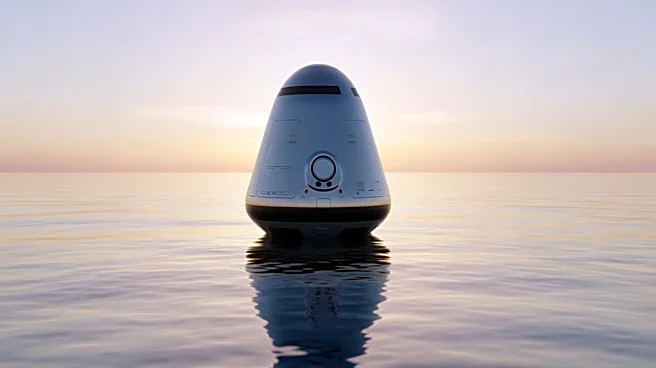
Following the successful flyby, the Artemis II mission is set to return to Earth, with a scheduled splashdown in the Pacific Ocean near San Diego. The mission's success is likely to bolster support for NASA's Artemis program, which aims to establish a sustainable human presence on the Moon by the end of the decade. Future missions may focus on landing astronauts on the lunar surface, conducting more detailed scientific research, and testing technologies for eventual missions to Mars. The Artemis program's progress will be closely monitored by international space agencies and private space companies, potentially leading to increased collaboration in space exploration.