







What's Happening?
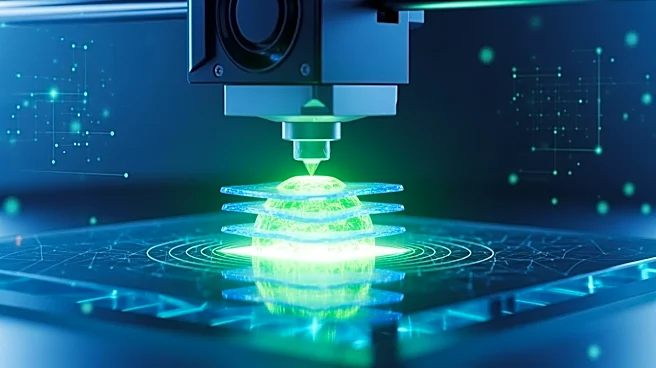
Recent advancements in 3D printing technology are poised to significantly reduce the costs associated with CAR T-cell therapy, a highly effective cancer treatment. Traditionally, CAR T-cell therapy involves extracting T-cells from a patient's blood, genetically
engineering them to target cancer cells, and then reintroducing them into the patient's body. This process is not only time-consuming, taking about a month, but also extremely expensive, with costs exceeding £280,000 per treatment. The high cost has limited the availability of this therapy to wealthier nations. Researchers, led by Judit Guasch Camell at the Materials Science Institute of Barcelona, have developed a method using 3D-printed structures that mimic human lymph nodes, where T-cells are naturally activated. This innovation has shown to increase the efficiency of T-cell activation and proliferation, potentially reducing the need for costly chemicals and labor, thereby lowering overall treatment costs.
Why It's Important?
The development of a cost-effective method for producing CAR T-cells could democratize access to this life-saving therapy, making it available to patients in lower- and middle-income countries. By reducing the financial barriers, more patients could benefit from this advanced cancer treatment, potentially improving survival rates and quality of life for those affected by certain types of cancer. The ability to produce CAR T-cells more quickly and efficiently also means that patients could receive treatment sooner, which is crucial for those with rapidly progressing diseases. This advancement not only represents a significant step forward in cancer treatment but also highlights the potential of 3D printing technology to revolutionize medical therapies.
What's Next?
Further research is needed to determine the scalability and precise cost savings of this new method. If successful, it could lead to widespread adoption in medical facilities around the world, particularly in regions where access to advanced cancer treatments is currently limited. Stakeholders in the healthcare industry, including biotechnology companies and healthcare providers, will likely monitor these developments closely. The potential for reduced costs and increased accessibility could also prompt policy changes and new funding opportunities to support the integration of this technology into standard cancer treatment protocols.
Beyond the Headlines
This breakthrough in 3D printing technology for CAR T-cell therapy could have broader implications for the field of immunotherapy. By improving the efficiency and reducing the cost of producing genetically engineered cells, similar approaches could be applied to other types of cell-based therapies. Additionally, this development underscores the importance of interdisciplinary collaboration in medical research, combining expertise in materials science, biotechnology, and clinical medicine to address complex healthcare challenges. As the technology matures, ethical considerations regarding the accessibility and distribution of advanced medical treatments will become increasingly important, ensuring that innovations benefit a diverse range of patients globally.