






What's Happening?
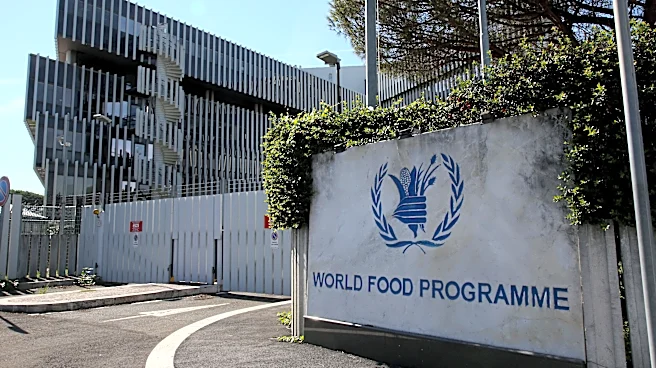
The ongoing crisis in the Middle East is significantly exacerbating global hunger and disrupting supply chains, according to a World Food Programme (WFP) report published in April 2026. The report, titled 'How the Mideast crisis is deepening hunger far
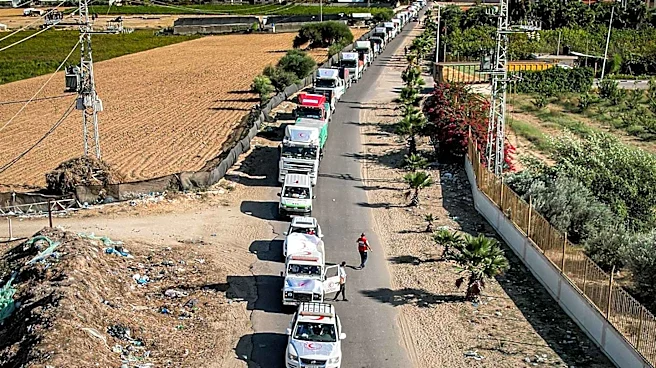
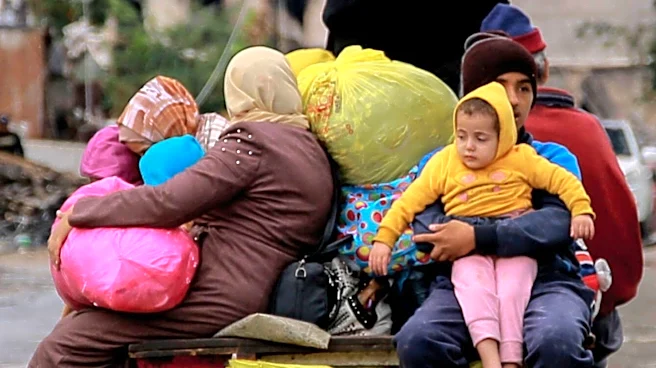
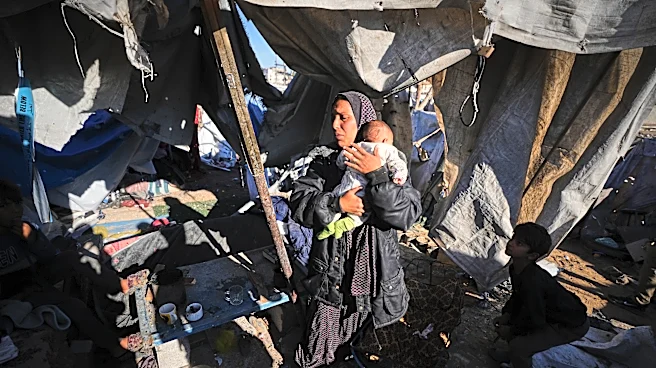
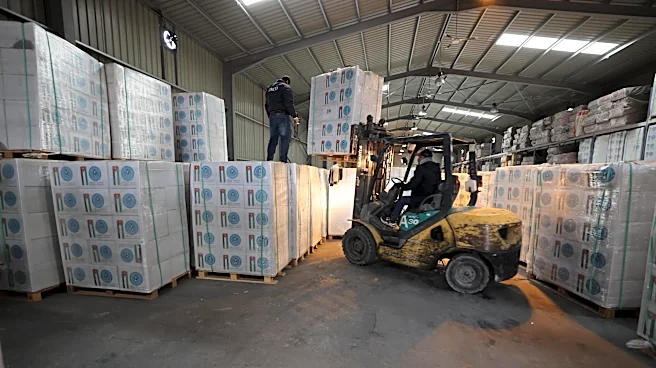
beyond the front lines,' highlights that the conflict's impact extends beyond the region, affecting distant economies through price increases, supply disruptions, and trade pressures. Countries already facing fragile economic and food security conditions are experiencing worsening food insecurity, with Gaza facing extreme shortages due to blockades. The crisis is increasing hunger at a rate that aid systems are struggling to match, creating a growing gap between rising needs and limited humanitarian response. Challenges in food delivery and distribution are also prevalent due to disrupted transport routes and security restrictions.
Why It's Important?
This report underscores the interconnectedness of global systems, demonstrating how regional conflicts can trigger widespread humanitarian and economic crises. The ripple effect of the Middle East crisis on food, fuel, and supply networks impacts vulnerable populations worldwide, particularly in import-dependent countries. Rising fuel and transport costs are driving up food prices, making it difficult for low-income households to afford essential sustenance. The strain on humanitarian organizations, forced to reduce rations or limit aid due to increased operational costs, means that millions are left without adequate support. This situation not only threatens immediate food security but also destabilizes economies, potentially leading to social unrest and further humanitarian emergencies in various regions, including Africa, Southeast Asia, and the Caribbean.
What's Next?
The WFP report suggests that without concerted international efforts, the global hunger crisis fueled by the Middle East conflict will continue to worsen. There is an urgent need for increased funding and international cooperation to strengthen aid systems and ensure efficient logistics for food delivery. Governments and humanitarian agencies must work to mitigate the impact of rising fuel and transport costs on aid operations. Additionally, addressing the root causes of the conflict and ensuring stability in the Middle East will be crucial for long-term global food security. The report implies that if current trends continue, more countries will face severe economic and humanitarian challenges, necessitating a more robust and coordinated global response to prevent further escalation of hunger and instability.
Beyond the Headlines
The WFP's findings reveal a deeper systemic vulnerability within global food, energy, and trade systems. The crisis exposes how disruptions in one critical region can cascade into a worldwide problem, highlighting the fragility of current global supply chains. This situation could accelerate calls for greater regional self-sufficiency in food production and more diversified energy sources to reduce reliance on volatile regions. Furthermore, it may prompt a re-evaluation of international aid mechanisms, pushing for more resilient and adaptable humanitarian response strategies. The long-term implications include potential shifts in global trade patterns, increased focus on climate resilience in agriculture, and a renewed emphasis on diplomatic solutions to prevent regional conflicts from becoming global humanitarian disasters. The crisis also underscores the ethical imperative for wealthier nations to support vulnerable populations disproportionately affected by distant conflicts.