



What's Happening?
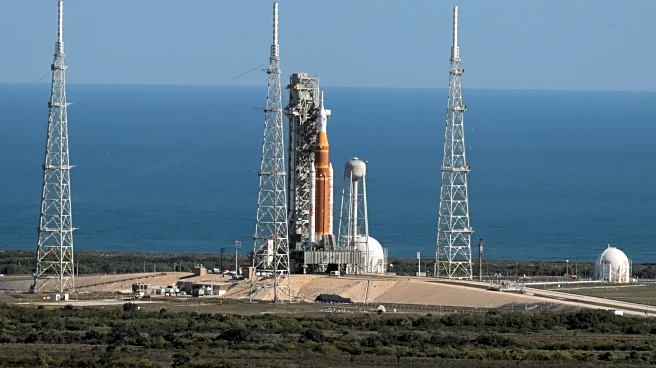
NASA is preparing for a critical prelaunch test known as a 'wet dress rehearsal' for the Artemis II mission, which aims to send four astronauts around the moon. This mission marks the first crewed lunar mission in over 50 years. The wet dress rehearsal involves
loading over 700,000 gallons of fuel into the Space Launch System (SLS) rocket and conducting a detailed countdown schedule. The test was delayed due to freezing temperatures at the Kennedy Space Center in Florida. The countdown began on Saturday, with a simulated launch window set for Monday evening. The mission is a significant step towards NASA's goal of returning humans to the moon and eventually reaching Mars. The astronauts, including NASA's Victor Glover, Christina Koch, Reid Wiseman, and Canadian Jeremy Hansen, are currently in quarantine in Houston to prevent illness before the launch.
Why It's Important?
The Artemis II mission is pivotal for NASA's long-term lunar exploration goals, serving as a precursor to future missions that aim to establish a sustainable human presence on the moon. This mission not only represents a technological and logistical milestone but also reinforces international collaboration in space exploration, as evidenced by the inclusion of a Canadian astronaut. Successful completion of the wet dress rehearsal is crucial for ensuring the safety and readiness of the spacecraft and crew. The mission's success could bolster public and governmental support for NASA's Artemis program, potentially influencing future funding and policy decisions related to space exploration.
What's Next?
If the wet dress rehearsal proceeds without issues, the Artemis II mission is scheduled to launch no earlier than next Sunday, with additional launch windows available in March and April. The astronauts will travel to the Kennedy Space Center six days before the launch to prepare for the mission. The outcome of this mission will likely impact the timeline and planning of subsequent Artemis missions, including the eventual goal of landing humans on Mars. Stakeholders, including international space agencies and private sector partners, will be closely monitoring the mission's progress and outcomes.