




What's Happening?
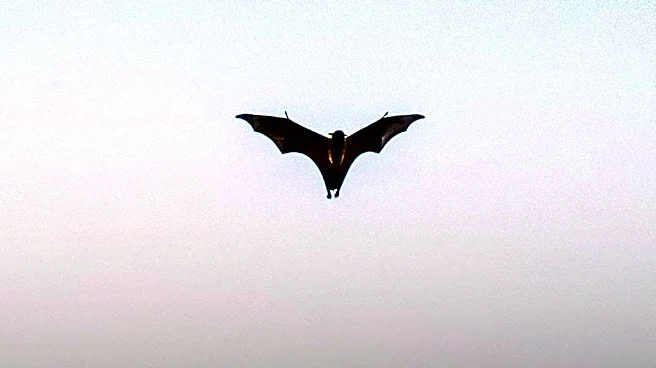
The Minnesota Department of Health (MDH) is actively searching for a woman who was seen handling a bat that later tested positive for rabies. The incident occurred on a downtown Minneapolis sidewalk on Hennepin Avenue, between North Washington Avenue and North Third
Street, around noon on Tuesday. The bat was subsequently taken by another passerby for testing, which confirmed the presence of rabies. The woman is described as being 25 to 30 years old, approximately 5 feet 5 inches tall, with curly brown hair, and was accompanied by a curly-haired golden retriever-like dog. Health officials are urging anyone who may have touched the bat to immediately contact 911 to be connected with Animal Care and Control, and to also reach out to their healthcare provider. The MDH emphasizes that bat bites can be painless and may not leave visible marks, making it crucial for anyone with potential exposure to seek medical advice.
Why It's Important?
This incident highlights a significant public health concern due to the fatal nature of rabies once symptoms appear. While preventable through vaccination, there is no cure once the disease manifests, and symptoms can take weeks or even months to emerge. The MDH's urgent search for the woman underscores the critical need for post-exposure prophylaxis to prevent the disease. The potential for asymptomatic bites means individuals might not realize they have been exposed, increasing the risk of delayed treatment. The broader implication is a reminder to the public about the dangers of interacting with wild animals, particularly bats, and the importance of immediate medical attention following any potential contact. This event serves as a public health warning, reinforcing the need for vigilance and prompt action to mitigate the spread of this deadly virus within the community.
What's Next?
The Minnesota Department of Health will continue its efforts to locate the woman who handled the rabid bat. Public appeals for information are likely to persist, urging anyone with knowledge of the individual's identity or whereabouts to come forward. Concurrently, health officials will be monitoring for any potential new cases of rabies exposure linked to this incident. Educational campaigns may be intensified to inform the public about the risks associated with wildlife contact and the necessary steps to take if exposure occurs. The focus will remain on preventing human rabies cases through timely intervention and raising awareness about the severity of the disease. The MDH will also likely continue to collaborate with Animal Care and Control to manage any further reports of potentially rabid animals in the area.
Beyond the Headlines
Beyond the immediate public health response, this event touches upon the broader ecological and societal interface between urban environments and wildlife. As urban areas expand, encounters with wildlife, including bats, become more frequent, posing ongoing challenges for public health and animal control agencies. The incident also highlights the ethical considerations surrounding human interaction with wild animals; while intentions may be benign, the lack of awareness regarding disease transmission can have severe consequences. This situation could prompt discussions on enhanced public education programs regarding wildlife safety, particularly in densely populated areas. Furthermore, it underscores the continuous need for robust public health surveillance systems to track and respond to zoonotic diseases, ensuring community safety in an increasingly interconnected world where human and animal habitats often overlap.