

What's Happening?
President Trump's continued advocacy for data centers, essential for artificial intelligence, is generating a political dilemma for Republicans. This stance is increasingly at odds with American voters, over 70% of whom oppose data centers being built
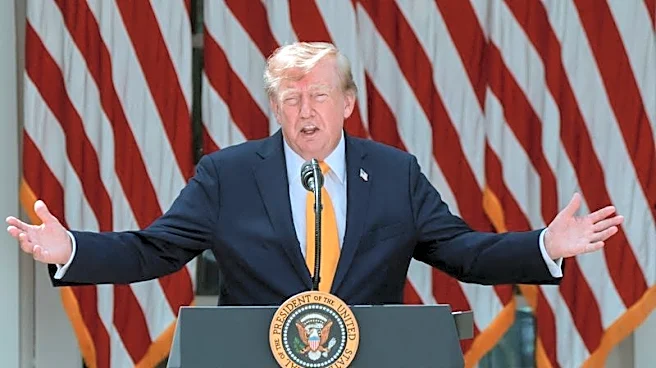
near their homes, according to recent polling. President Trump has publicly stated that communities should embrace data centers for economic success, lower taxes, and job creation, dismissing concerns from opponents. This strong backing of the industry and his combative remarks towards those who oppose data centers are creating political headwinds for Republican candidates in upcoming midterm elections. The issue has transcended traditional partisan lines, with backlash emerging from both Democrats and Republicans, and across generational and urban-rural divides. This bipartisan opposition is forcing politicians to reevaluate their positions on data center development.
Why It's Important?
The growing public opposition to data centers, despite President Trump's support, highlights a significant disconnect between a key political figure's economic vision and local community concerns. This issue is important because it ties together several critical themes in this year's elections, including the cost of living, energy prices, and job security. The rapid expansion of data centers, driven by AI, raises concerns about increased electricity costs, which exacerbate existing frustrations over the cost of living. Furthermore, the technology's potential impact on jobs and the tax incentives offered to tech companies are under scrutiny. The political bind for Republicans is particularly acute as they try to balance support for President Trump's pro-AI and pro-business agenda with the need to address voter anxieties about local impacts. This situation could influence election outcomes in competitive races across the country, as candidates struggle to navigate an issue that lacks clear partisan alignment.
What's Next?
The bipartisan nature of the backlash against data centers suggests that this issue will continue to be a significant factor in U.S. politics for the foreseeable future. As companies continue to invest heavily in expanding data center infrastructure, local communities and politicians will likely face ongoing pressure to address concerns about electricity consumption, land use, and potential economic impacts. The White House has attempted to mitigate these concerns by securing agreements with tech companies to minimize the impact on Americans, but these efforts have not fully appeased critics. Candidates in upcoming elections will need to develop nuanced positions on data center development to appeal to voters who are increasingly vocal about their opposition. The evolving public sentiment could lead to new regulations or policy changes at local, state, and potentially federal levels regarding the siting and operation of data centers.
Beyond the Headlines
The debate surrounding data centers extends beyond immediate political and economic concerns, touching upon deeper implications for technological advancement, environmental sustainability, and community autonomy. The push for AI development, championed by President Trump, underscores a national imperative to maintain a competitive edge in technology, particularly against global rivals like China. However, the environmental footprint of data centers, especially their substantial electricity consumption, raises questions about their long-term sustainability and contribution to climate goals. The tension between national technological ambitions and local community well-being highlights a broader societal challenge: how to balance innovation and economic growth with environmental responsibility and quality of life for residents. This issue also brings to light the ethical considerations of technological progress, particularly when it leads to perceived burdens on local populations without clear, immediate benefits for them.