
What's Happening?
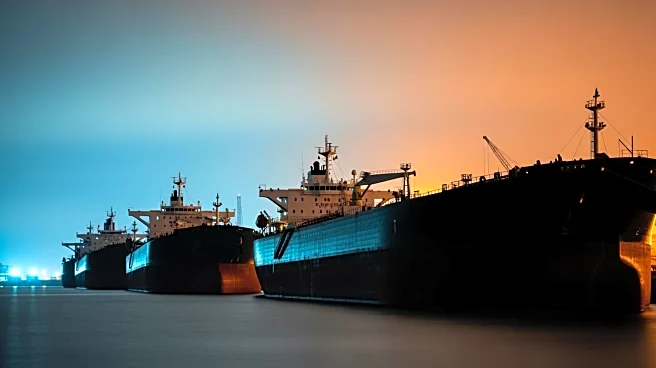
The Trump administration has intensified its economic pressure on Iran by sanctioning 29 shadow fleet tankers. These vessels are reportedly used by Iran to export petroleum and petroleum products through
deceptive shipping practices. The U.S. Treasury’s Office of Foreign Assets Control (OFAC) has targeted these tankers as part of a broader strategy to cut off revenue streams that fund Iran's military and weapons programs. Additionally, the sanctions aim to disrupt the flow of Iranian oil to Venezuela, which relies on these imports to sustain its oil production. Egyptian businessman Hatem Elsaid Farid Ibrahim Sakr, associated with seven of the sanctioned vessels, is also targeted for facilitating these illicit exports.
Why It's Important?
The sanctions are a critical component of the Trump administration's 'maximum economic pressure' campaign against Iran. By targeting the shadow fleet, the U.S. aims to reduce Iran's oil revenue, which is crucial for its military funding. This move also impacts Venezuela, which depends on Iranian oil to maintain its energy production amidst domestic refinery challenges. The sanctions could lead to increased operational costs for Iranian oil exporters and further strain Venezuela's already struggling economy. The broader geopolitical implications include heightened tensions between the U.S., Iran, and Venezuela, potentially affecting global oil markets and international diplomatic relations.
What's Next?
The U.S. has threatened to halt any sanctioned tanker involved in Venezuela's oil trade, indicating a potential escalation in enforcement actions. This could lead to increased maritime security measures and further diplomatic confrontations. The international community, particularly countries involved in the flagged vessels, may face pressure to comply with U.S. sanctions, potentially leading to shifts in global shipping and trade practices. The situation may also prompt Iran and Venezuela to seek alternative routes or partners to circumvent the sanctions, impacting global oil supply chains.