



What's Happening?
A rapidly strengthening 'super' El Niño event is unfolding, with scientists from the National Oceanography Centre (NOC) and other leading universities contributing to a briefing on its potential impacts. El Niño, a natural climate phenomenon originating
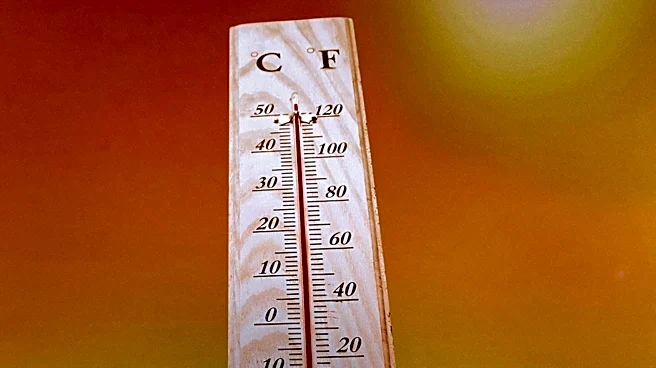
in the tropical Pacific Ocean, influences global weather patterns, leading to heatwaves, droughts, heavy rainfall, and flooding. This particular event is occurring against a backdrop of long-term human-driven climate warming, which is expected to amplify its effects. Professor Penny Holliday, NOC’s Chief Scientific Officer, highlighted that while previous strong El Niño events didn't always result in record global temperatures, the current warming planet leaves less 'headroom' before new records are broken, making this potentially the strongest El Niño in modern history. The briefing aims to provide evidence-based messages to journalists and media organizations to ensure accurate reporting on the event's implications.
Why It's Important?
The intensification of this El Niño event carries significant implications for communities, ecosystems, food production, and economies worldwide, including the U.S. While its direct effects on U.S. weather patterns can vary regionally, the global consequences of disrupted food production and supply chains could lead to economic instability and increased commodity prices, affecting American consumers and businesses. The interaction between this natural phenomenon and human-driven climate change means that extreme weather events, such as heatwaves and intense rainfall, are likely to be more severe and frequent. This situation underscores the critical need for sustained ocean observations and improved forecasting capabilities to help communities prepare for and mitigate the impacts of such events, which can have far-reaching humanitarian and economic consequences.
What's Next?
The immediate focus is on monitoring the evolving El Niño event and its interaction with existing climate warming trends. Scientists will continue to analyze ocean observations to understand the processes driving climate variability and improve forecasting accuracy. The Royal Meteorological Society, in collaboration with institutions like NOC, will continue to disseminate evidence-based information to media and the public to ensure accurate understanding and reporting of the event's impacts. Communities and governments globally, including in the U.S., will need to prepare for potential increases in extreme weather events, such as more intense heatwaves, droughts, and flooding, which could affect infrastructure, agriculture, and public health in the coming months and years.
Beyond the Headlines
The current 'super' El Niño event highlights a critical intersection between natural climate cycles and anthropogenic climate change. The amplified effects of this El Niño due to a warmer planet suggest a new paradigm for understanding and responding to climate phenomena. This situation raises ethical questions about global responsibility for climate change and the equitable distribution of resources for adaptation and mitigation. The long-term implications could include shifts in global food security, increased migration due to climate-related disasters, and heightened geopolitical tensions over resource scarcity. It also underscores the urgent need for international cooperation in climate research, data sharing, and policy development to address the complex and interconnected challenges posed by a changing climate.