







What's Happening?
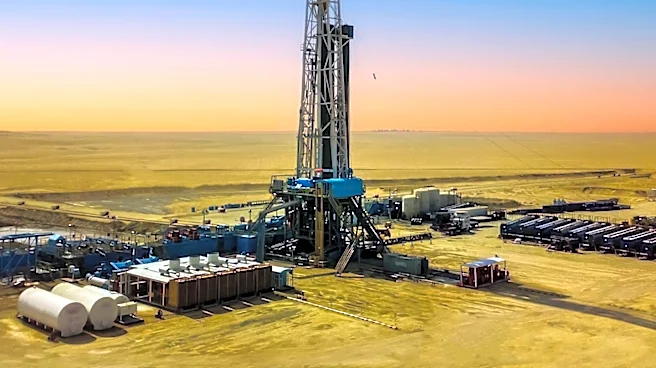
The Bureau of Land Management (BLM) recently conducted a quarterly oil and gas lease sale across New Mexico, Oklahoma, Kansas, and Texas, generating more than $125 million in revenue. During this sale, the BLM leased a total of 28 parcels, encompassing
7,066 acres. This initiative is part of the BLM's ongoing efforts to manage public lands for various uses, including energy development. The revenue generated from these lease sales contributes to both federal and state treasuries, supporting various public services and conservation efforts. The specific details of the parcels and the bidding process were managed by the BLM, adhering to established federal regulations for resource extraction on public lands.
Why It's Important?
This significant revenue generation from oil and gas lease sales underscores the continued importance of fossil fuels in the U.S. energy landscape and the federal government's role in facilitating their extraction. The over $125 million generated will be split between the federal government and the respective states where the leases are located, providing substantial financial resources. These funds can support local economies, infrastructure projects, and public services in New Mexico, Oklahoma, Kansas, and Texas. For the energy industry, these leases provide access to new drilling opportunities, potentially increasing domestic oil and gas production and contributing to energy independence. However, it also highlights the ongoing debate between energy development and environmental conservation, as the leasing of public lands for fossil fuel extraction often draws scrutiny from environmental groups and climate advocates.
What's Next?
Following the lease sale, the companies that secured these parcels will proceed with exploration and potential development activities, subject to further environmental reviews and permitting processes. This will involve detailed geological surveys, drilling plans, and adherence to federal and state environmental regulations. The revenue generated will be allocated according to established federal and state formulas, impacting budgets and funding for various programs. Future BLM lease sales will likely continue to be a point of interest for both the energy industry and environmental organizations, with ongoing discussions about the balance between resource development and conservation. The long-term implications will depend on global energy markets, technological advancements in extraction, and evolving federal energy policies.
Beyond the Headlines
The BLM's oil and gas lease sale reflects a broader tension within U.S. public land management: balancing economic development and energy security with environmental stewardship and climate goals. While these sales provide immediate revenue and support the domestic energy supply, they also contribute to greenhouse gas emissions and potential ecological impacts on public lands. This ongoing dynamic often leads to legal challenges and policy debates, particularly concerning the extent to which federal lands should be utilized for fossil fuel extraction versus conservation or renewable energy development. The long-term shift towards cleaner energy sources may eventually reduce the demand for such leases, but in the interim, these sales remain a significant component of federal land use policy and a key revenue stream for energy-producing states. The ethical considerations revolve around intergenerational equity and the legacy of resource extraction on public lands.